In our Creative Flow as Resource course we spend a good deal of time learning about our temporal prefereces, how we deal with time, how we use and where does it myseriously go? We also travel through time quite ofter and this video is a great illustration of such travels – what would your advice be to yourself in the past? And what would be your advice to the future self?
Category: inspiration

Waiting time: “gaps between the actual events”
In my Psychology of Time course I have offered students an assignment where they were exploring the experience of waiting time. They observed themselves in a situation of waiting and others while waiting for something in a public space.
Some very interesting observations and insights have emerged:
“Are the portions of time spent waiting truly just empty gaps between the actual events of one’s life, or are they also events in their own right? As I discovered while waiting at the bus stop, the time spent waiting for an event to begin can sometimes be even more valuable than the event itself.”
A very rare approach these days:
If the subway has not left the station yet while I am on it, I will tell myself that it is ok because now someone was able to make it on who needs to get to an important meeting.

The Curiosities of Janice Lowry
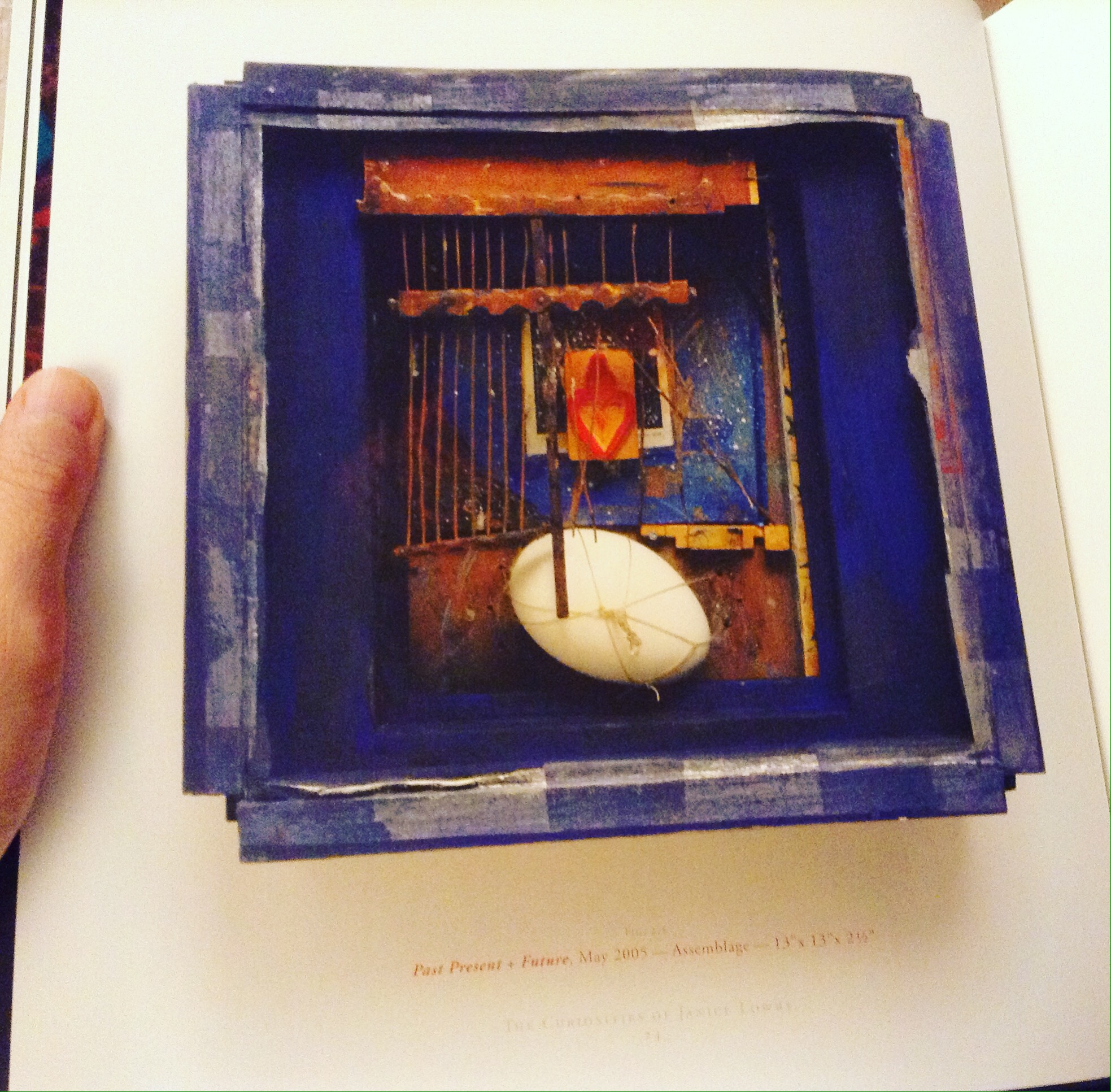
Last Friday I went to pick up a book from the library and found something extraordinary on display – the Curiosities of Janice Lowry. Until then was totally oblivious of this American artist. I’m still discovering about her life and work. Here wanted to note a few of her assemblages about time.


M Train – Patti Smith
Trying to make sense of a subjective narrative with an asymmetrical timeline

Want to stay sane when working on a big project – take creative breaks
I’m currently super busy with preparing the conference and festival about the concept of time: Celebrating Time. There are all sorts of things that need to be taken care of in various directions. It’s easy to get side tracked, or burnout. Therefore to keep myself focused, and at the same time to give myself time to recover I am taking breaks. After unsuccessful attempt to find a tango partner or kayaking partner, I’ve settled with an online drawing course: Ethno Fun.
Maria, the author of the course, sends me an email once a week with the description of the lesson and plenty of photos that illustrate it. By today I’ve received five lessons, but was able to work on three of those and still haven’t completed the third lesson fully. However, it’s very rewarding. It has been a while since I held a paint brush in my hand and I haven’t really worked with watercolors earlier either. It has been a journey full with different discoveries.
Besides the standard watercolors, we are using tea and coffee as paints and all sorts of natural materials as a ‘brush’, such as feathers, sticks, toothpicks, leaves, ropes, and etc. I’m gradually getting more different brushes and markers and am getting better at using them, well at least that what I think…
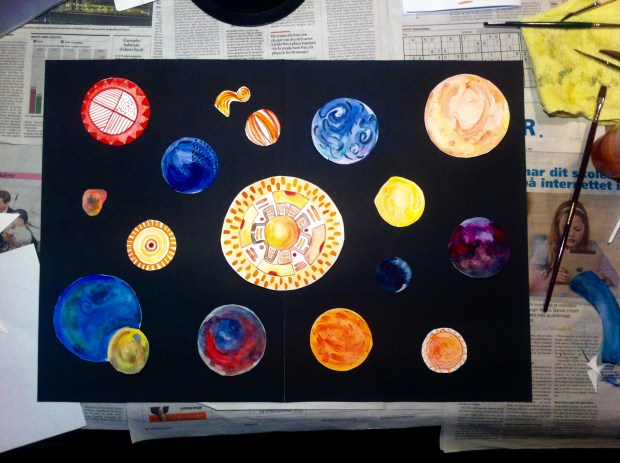
Here you can see some of my work that was born during this course, which helps me to unwind and switch off and then to be fresh again.
Lesson 1: Creating the universe and planets

Urbanism and Creativity: Jane Jacobs
I believe that lively cities where society can operate in an intense way make meetings out of which very fertile and ingenious decisions can come. But if people are isolated, fragmented, if one income class is set off from other income classes, the meeting simply does not occur. If different kinds of talents don’t come together, if different sorts of ideas don’t rub up against one another, if the necessary money never comes in juxtaposition with the necessary vision, the meeting doesn’t occur.
Happy 100th birthday, Jane Jacobs. via Brain Pickings / Maria Popova
Note to myself: get the book: Jane Jacobs: The Last Interview: and Other Conversations
Making connects the hand, eye and brain in a very special way
An interesting article about transforming and empowering role of creating by Paula Briggs, director of AccessArt:
Creating is not just a ‘nice’ activity; it transforms, connects and empowers
We don’t need to make to entertain ourselves: in the past we might have kept our hands and eyes busy with making in our spare time, but now we occupy ourselves through binary code.
I hope that more of us will choose making and creating instead of the ‘binary code’!
Fake it till you become it
A very inspiring TED talk by Amy Cuddy, social psychologist, Harvard Business School:
Your body language shapes who you are

The essence of a place
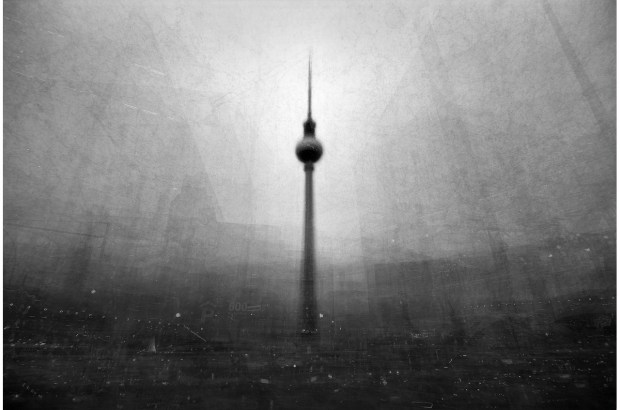
A very interesting find for me – the works of a German photographer Frank Machalowski.
Multiexpo 100 | Frank Machalowski
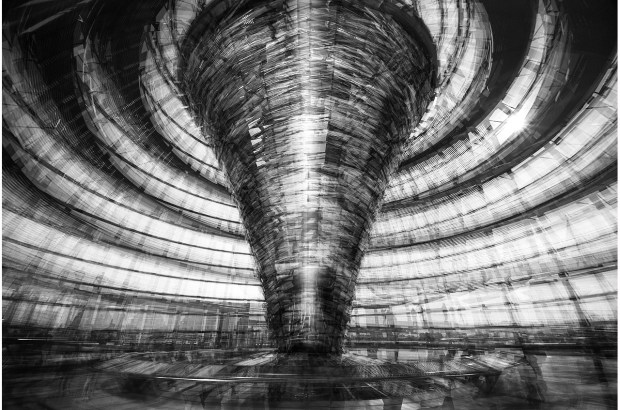
Since my talk on chronotope, the notion of time-space and its application in the city scape, I’ve been paying more attention to how time and space are intertwined in the urban setting. Working with the geometrical figures inspired by Chillida’s work has also made an impact on how I perceive the geometry in everyday setting. I particularly like the image below, where you can see the geometrical forms ‘floating’ in the air.

Multiexpo | Frank Machalowski
These interesting series by Frank Machalowski tapped into something I wonder about these days – the interconnections of places in time and the geometry of it. Am not sure how to phrase it even.. I guess it will come later on..

Multiexpo | Frank Machalowski
I really enjoyed Frank’s approach to a place – to take multiple exposures of it, to capture the surrounding context, but make it subtle, to keep only the essence and mute down a bit the everyday buzz that surrounds it. It’s like taking a perspective of that building or place on what’s happening around it. To see what emanates from the building. It especially caught my attention, since I just came back from Berlin and just being in those spaces myself made me more attuned to these series.
Should load some film into my old Zenit and try this out..
Multiexpo | Frank Machalowski
Inspiration: Eduardo Chillida
I have stumbled upon Marion Deuchars’ Draw Paint Print like the Great Artists in Glyptoteket’s book shop I believe. I really liked it since from the quick look it had a variety of different techniques in it. And I’ve been exploring the book and the artists featured in it since then.
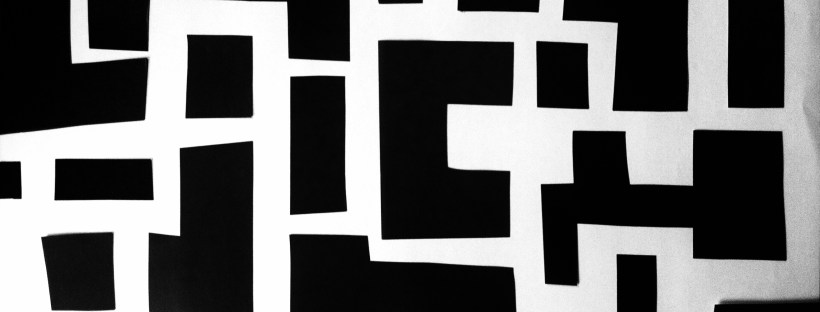
This time I was completely absorbed by a whole new world that has opened up for me – the world of Eduardo Chillida (1924-2002). I must say that I can’t remember if I heard anything about him until now, I probably had, but it didn’t really stay in my memory. I am very thankful to Marion for including this artist in her book! Not only I had loads of fun first coloring the proposed shapes in the book and later trying out my own cut outs, but also I was mesmerized by Eduardo’s work.
Here are a few examples, but a simple google search will reveal a whole new universe.


I’ve read what I could find on internet about him. A Spanish Basque and mostly known for his monumental sculptures. I will explore what the local library has to offer to get to know more about him and his work. From a very quick look I was struck by two of his projects in particular.
The Basque Liberties Plaza, Vitoria-Gasteiz, Araba, Spain – I would really like to go there and experience it.


Monument to Tolerance, Fuerteventura
Made by Arup in Mount Tindaya on Fuerteventura, one of the Canary Islands. From the photos I’ve found I somehow started to think about the Fifth Element movie… It definitely goes on my “wish-to-visit” list. Although I’m not sure if the island itself has any authentic places left or it is all devastated by the tourist industry…


Just returning from the study tour with DIS students to Berlin made me very aware of the effects architecture can have. And “Chillida’s original idea was for visitors to experience the immensity of the space” made me very curious about this piece.
The wikipedia also mentions an interesting encounter between Chillida and Heidegger: “Heidegger wrote: “We would have to learn to recognize that things themselves are places and do not merely belong to a place,” and that sculpture is thereby “…the embodiment of places.”

I was hoping to find some kind trace of this dialogue in print. However, not much is available in English. There is the original book in German and actually a translation of it in Danish. I’ll look around more, maybe I can find it in in some other language that I know better, but for now it goes into my “to read” list.
Here are some of my exercises on the Eduardo Chillida theme:


I’m currently reading Saramago’s The Cave and am trying to imagine the Center that he describes in the book and I think my further cutouts are really somehow intertwined with the book..


Then I tried to explore how Chillida was working more with the white space:
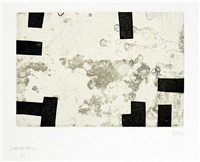
and here is my take on it:

but it was somehow difficult for me, then I rearranged the cutouts and spontaneously this version came out, which I still don’t know how it should be – vertical or horizontal..


 Creative Time Studio