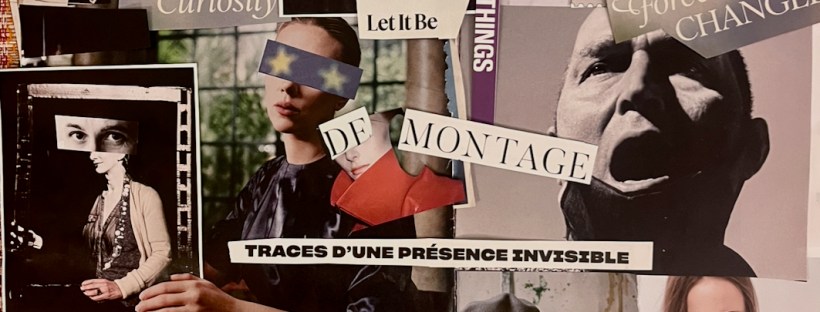
On composite identity

“Where are you from?” can be the most difficult question to answer.

I come from a Russian family, but I was born in Latvia. When I went to study in the US for a year, I felt very Russian there. Later, life brought me to study in Russia, and I didn’t feel fully Russian at all. That’s where I felt more Latvian. For Latvia I am always Russian, due to the political landscape.

Since my parents are Russian, does that make me Russian as well? Then why did I feel so off when I actually was in Russia? Since I was born and lived for 20 years in Latvia, does that make me Latvian?.. I felt that I was definitely from Riga, but the whole of Latvia I wasn’t sure..

So I ended up being a Latvian-Russian.. or something of that sort.. somewhere in-between..

I lived 20 years in Latvia and then I left. 25 years I have lived elsewhere. Can I still say I am from Latvia? I don’t know that much about the political situation there anymore.. I don’t have close friends who still live there.. I love the landscape, and whenever I go I really feel that this is where I am from, this is my place. I cry when I am in the pine forest and then walk out to the beach and I am in awe with the horizon..
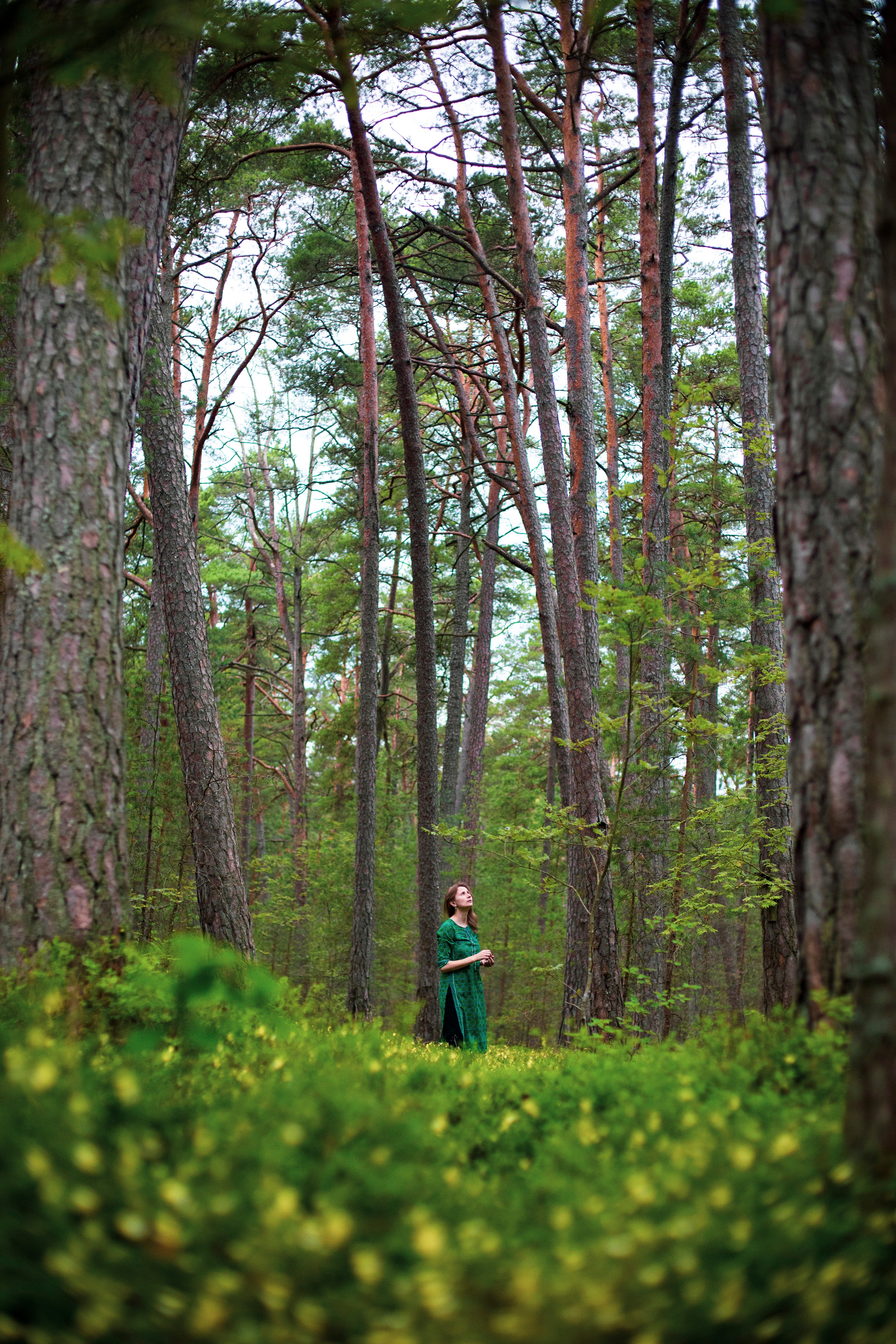
Cumulatively I lived 15 years in Scandinavia: 3 in Sweden and 12 in Denmark. That definitely left a mark on how I do things. Some of the local norms really did infuse in me. The way I plan, the way I communicate at work, the way I think about time and agreements. These and other things just settled in, slowly, over the years and became part of me..

So where am I from now?..

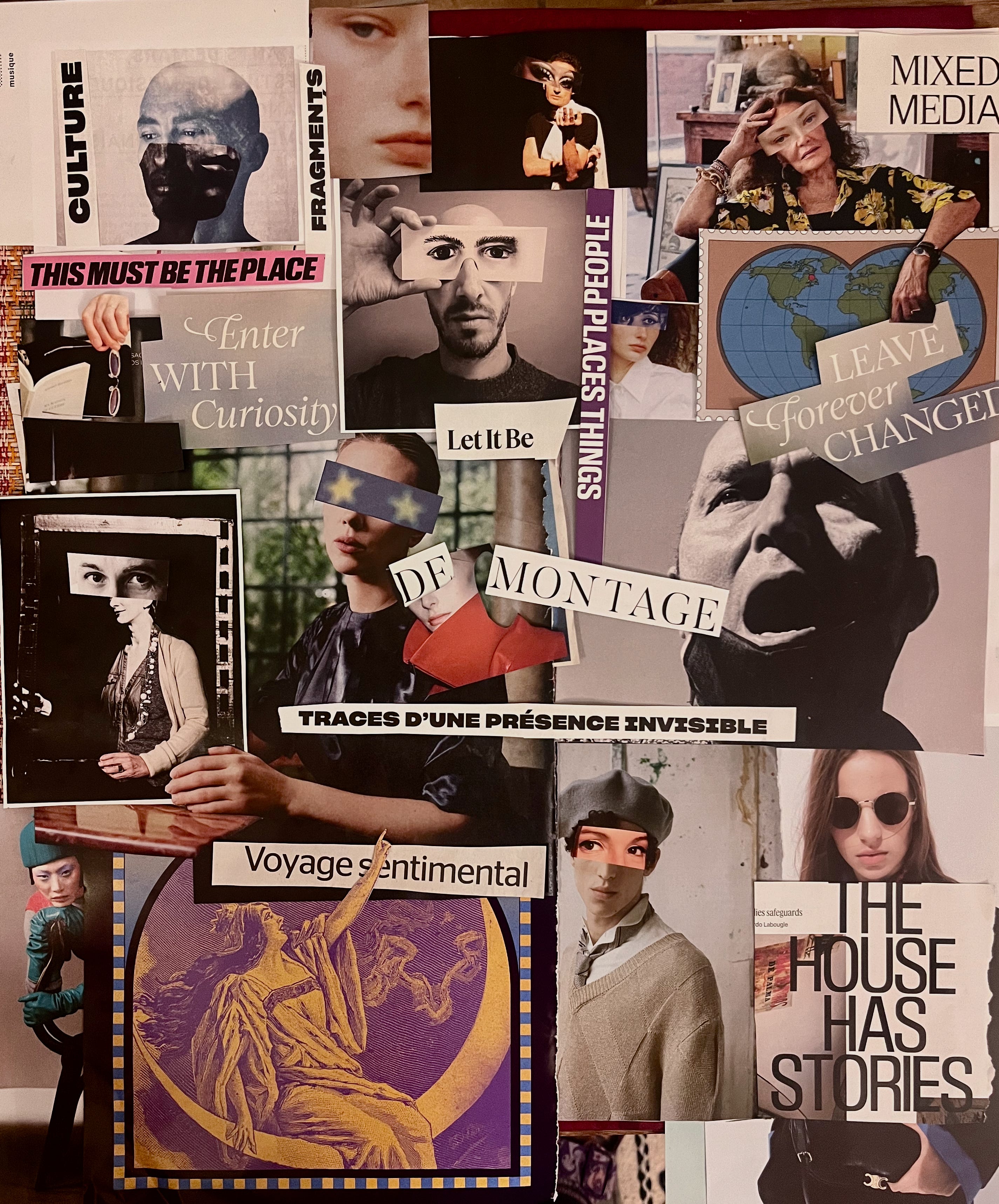
I think about the Danish poet Maja Lee Langvad here. She was born in Seoul in 1980, adopted at 3 months old, and grew up in Denmark. Her debut, Find Holger Danske (2004), takes its title from a legendary medieval warrior said to sleep beneath Kronborg Castle, waiting to wake and defend the nation in its darkest hour. Denmark’s King Arthur, essentially: the embodiment of what it means to be truly Danish. Which is exactly why Langvad’s gesture of renaming him “Holger Nondane” and “Holger Nowdane” cuts so deep. She takes the national myth and asks, flatly: where do I fit in this story? The book is a collage: adoption records, newspaper clippings, political documents, her own text, all cut together. She replaces words in common sayings to expose the prejudice hidden inside the language. The book won Denmark’s most significant debut prize.

From 2007 to 2010 she lived in Seoul to reconnect with her biological family. Out of that came Hun er vred (She Is Angry, 2014), a book about the transnational adoption industry. She describes a commercial system where children become export products, worth $15 million a year to South Korea. She is angry at the South Korean government, at Danish politics, at the biological family, the adoptive family, her friends, and at herself: “she is angry with herself for being angry.”

In her poem she asks:

What nationality would you say I am:

a. Danish?

b. Korean?

c. Both Danish and Korean?

d. Neither Danish nor Korean?

Later she reflects: “I saw myself as white, which sounds strange, because I could see that I was not when I saw myself in the mirror. I was not used to seeing other Asian or Korean bodies. There were almost exclusively white bodies: school teacher, dentist, friends, family, principal, parents’ friends. It was too wild an experience when I came to Seoul and suddenly mirrors my own body in a lot of others.”

You can listen to the interview with her here: http://k-10094.blogspot.dk/2009/12/148-voices-from-within-korean-diaspora.html (starts around 07:45)

She doesn’t feel comfortable in her adoptive country. She doesn’t feel comfortable in her country of origin, though she says in some ways she feels more at home in South Korea, finding its landscape better suited to her temperament than the flat Danish countryside. An unresolvable in-between.

Feels familiar. The scale is different. The circumstances are very different. But the structure of the feeling, I think, is similar: we carry pieces from places and none of them adds up to one whole thing. It’s like a collage..

Langvad’s story is about displacement and the anger that comes with it. But there is another side to the collage: the part where you actually build something from the pieces.

In a study I did with my colleagues Elisabeth Schilling and Carolyn Patterson, we interviewed people living in Denmark and traced how their image of the future changed over time. What we observed was a “time-collage”: identity assembled from fragments of different pasts and different cultural contexts, layered with their ex-statuses. A person might carry their ex-Londoner self, their Greek roots, their role as a parent in Copenhagen, all on top of each other. Each new place added pieces while older ones shifted or faded.
Dorte, one of our respondents, grew up between Iraqi and Danish cultures. She had lived in Denmark for 19 years, the major part of her life, and still her name and her looks were a problem. “I never thought my name or looks could be a problem, but it is here in Denmark. It’s very.. people don’t talk about it. But it is there and we know it.” And yet she was actively constructing something from those two worlds: “For me, I come from a place that has two cultures, from that place grows a new culture. I’ve taken things from my own culture, from the Danish culture which I find really really beautiful…”

Cristofer, after years of moving between Greece, the UK, Saudi Arabia, Canada and Denmark, arrived at something quieter: “you always feel foreign, because you’re not from there, but somehow you feel that you have a sense of ownership where you are at.”

Two different things happening here. Dorte is building a new culture from the pieces. Cristofer is learning to feel at home without fully belonging. Both are forms of composing a life from fragments.

Yuliya Molina, a video artist originally from Mariupol, Ukraine, now living in Zagreb, Croatia, approaches this with a beautiful simplicity. In her short film NE-KDO (Some-body), instead of “or… or… or…” she chooses “and… and… and…” Russian and Ukrainian and Croatian. She arrives at her-self as a collage, all the pieces kept, nothing subtracted:

My friends at Hamide Design Studio in Copenhagen know this from their own skin. When they moved to Scandinavia, they were immediately put in what they call “the Turkish women box”: oppressed, uneducated, not feminist, Muslim. Their initial interactions were more like an interrogation based on a checklist than actual curiosity. So they started I Feel From, a social movement that changes the conversation entirely. Instead of “where are you from?” (the roots, the box, the passport), they ask: where do you feel from?
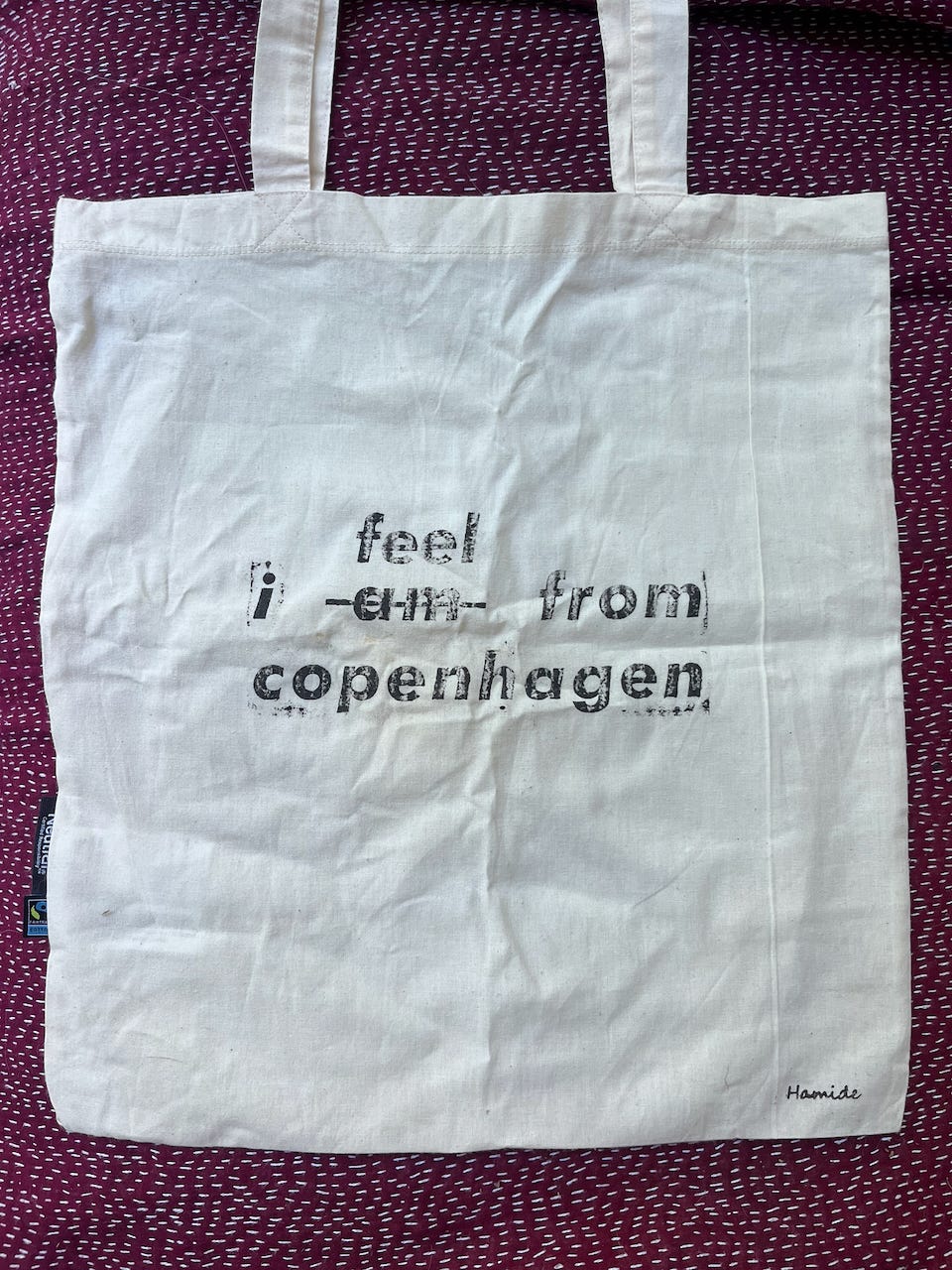
I invited them into my classroom to run a workshop, where we were encouraged to make our own passports. The answer is rarely one country. It might be a city, a kitchen, a language, a season. A grandmother’s garden. A particular quality of light. The passports became a social movement, workshops, exhibitions. I love it because it gives people a simple, concrete way to hold the multiplicity. You don’t have to pick one answer. It can be a plural one.. Instead of the Aristotelean logic of “either… or…”, it’s the Arabic logic of “and … and …”. Where the in-between can be a whole entity also..

In my practice I work with people who carry multiple countries inside them. They grew up somewhere, studied somewhere else, built a career in a third place, fell in love in a fourth. They code-switch between languages, between cultural codes, between versions of themselves. Sometimes they come to therapy because they feel they don’t fully belong anywhere. There is a grief in it for a belonging that maybe never fully existed.

What I see is that many of them have already done something they don’t give themselves credit for: they have built a self out of fragments, and that self works. It knows how to be in a Danish meeting and at a Russian kitchen table and at a French bureaucratic counter. But they don’t always see this as a strength because the dominant narrative says you should be from somewhere. One place. One clear answer. A box.

I don’t have a clear answer either. I know I cry in the Latvian pine forest. I know I think about time both the Scandinavian and Slavic way. I know my grief speaks Russian. I know that France, my 7th country, is slowly becoming something too, though I can’t name what yet.

So maybe the right question to ponder about is the one Hamide asks: where do you feel from?

If this resonates and you’d like to explore questions of identity and belonging, contact me. I work with individual clients online and in Lyon. I am also open to leading workshops on identity, cultural transitions and belonging with organizations, schools and small groups.


References

Langvad, M. L. (2004). Find Holger Danske. Gyldendal.

Langvad, M. L. (2014). Hun er vred: En personlig beretning om transnational adoption. Gyldendal.

Sircova, A., Patterson, C., Schilling, E. (2020). Constructing biography – constructing identity: Changeable concept of the Future in Migrants. Frontiers in Time Research–Einführung in die interdisziplinäre Zeitforschung, 101-132. DOI:10.1007/978-3-658-31252-7_6

Hamide Design Studio. I Feel From. https://www.hamide.dk/work/i-feel-from/ and https://www.hamide.dk/work/i-feel-from-social-movement/
Arrivals and departures..

Finding one’s place..

It took one of my clients 19 years to realize they had left their home country. By the time we talked about it, they were already living in their fourth country.

Another client took 7 years to arrive to a new country. Everybody’s pace is very different.

These arrivals and departures are not so straightforward.

And to return to a country that once was home is not so easy either. At one point I was considering returning to Latvia, or moving to yet another country. Both felt equally difficult. In the 20+ years I was away, none of my close friends stayed there. The Latvian language is fading after two decades of not using it. Even my mother tongue, Russian, I am forgetting.. The only thing I still know is the city. Many street names are gone, but my visual memory is strong and I can find my way around. That’s it. Most of the connections, or connectors, are gone. A strange feeling, to be something in-between a guest and a local in the city where I grew up.

The person who was departing for 19 years: it was because most of those goings away were temporary. An educational program for a year in one place. Part of the higher education in another place. Some temporary work contract elsewhere. Work related prolonged stay somewhere else. A relationship started and ended.. but in between those beings away there were also some stays at home. However the last stay there was after a good 5 or 6 years.. being in their childhood room, looking at all those things that were waiting for them to come back.. that’s when they realized: actually I have left already, and that was 19 years ago.

And that room suddenly felt like a museum of life that never happened.. because other life was happening in parallel.

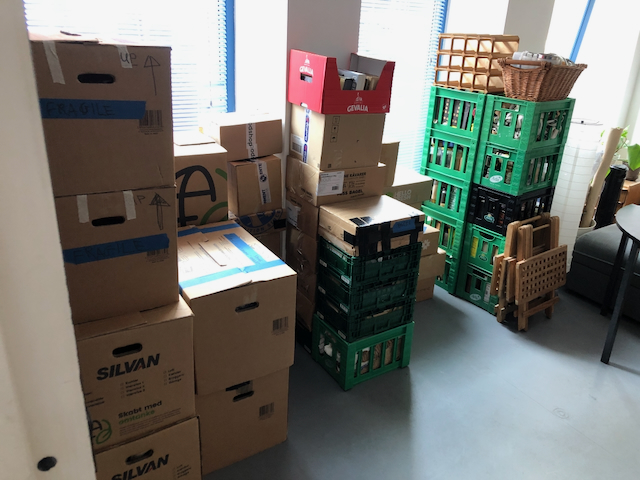
So often, when we have packed and moved our boxes to a new place, it doesn’t necessarily mean that we have either arrived or departed. It’s a bit more complicated than that.

Which country are you actually in right now?

Have you arrived?

Have you left?

Is there a room somewhere still waiting for you, quietly, filled with a life that has not happened?

If this resonates and you’d like to explore questions of arrival, belonging, or what it means to feel at home inside yourself, in 1:1 sessions or as part of a group, reach out to me. I see clients online and in Lyon, and I am open to leading workshops on time, presence and belonging with organisations, schools and small groups.

Arriving into 2025: Where is My Time?

Invitation to a self-reflection and self-exploration workshop

We are in the 4th week of the New Year, 2025. I would like to offer a time and space to reflect on how this year can unfold for us.

Something to ponder about:

“Life takes place in time and life will appear where I have time. ..”

“That which I have time for is that which I live for. “

In this workshop I would like us to explore the mysterious concept of time, consider it from the psychological perspective. It is also a time and space to reflect on what you wish for yourself to happen during this new year, how to find time for it, or how to create conditions to give your time to those projects, people and wishes.

I have a few reflection questions to discuss in the group format. I have a few hands-on activities to do on own and perhaps together. I have quite a few different tools I can tell you about how to become friends with time.

I am thinking about an in-person workshop in Copenhagen either in the evening of Wednesday, February 5, 2025 (tentatively 17 to 19ish) or in the morning of Saturday, February 8, 2025 (10.00 to 13.00).

Let me know if you would like to attend and when it best suits you. Otherwise I am in Copenhagen between February 3 and February 10 and still have a few openings for in-person individual sessions.

Looking forward to hearing from you! And hope to see you while I am in Copenhagen!

Kind regards,

Anna

Matter of Choice – part 2

Yesterday we had the second part of the in-person workshop “The Matter of Choice” in my Creative Time Studio in Copenhagen. It was great energy and interesting insights regarding what is the difference in what we feel about what we have chosen and something that happened which was not our choice.

We touched upon the conscious choice and inner consent, choosing our responses and being aware of habitual automatic reactions. We discovered that sometimes procrastination can be like an incubation period and protection from perfectionism.

And that sometimes “last minute panic” can be a great tool 🙂 ‘Negative’ events in our biographies can be a fertile ground for opening up to various opportunities that were not visible for us before.

Great question to ask oneself when faced with the situation of difficult choice: “Do I really see my options? Or do I need to look at the situation from a different perspective? Maybe I need to make a step back in order to move forward.”

If this resonates with you and you would like to explore the matter of choice as well – I will run the workshop online, two sessions on June 13 and June 20.

Warm welcome!

https://system.easypractice.net/event/matter-of-choice-online-c796a

#choice #workshop #creativetimestudio #existentialanalysis

Procrastination, Habits & Future Self: Finding Time for What Really Matters

There was quite some interest in our joint workshop with Konrad Piotrowicz, Change Consultant of Surrounded by Monkeys , however, the date did not work for many. Therefore we are shifting the workshop to Tuesday, June 4, 2024, 18.00 to 20.00.

Join us in this interactive space to explore the fascinating dynamics that arise when we introduce change into our lives. Whether it’s embarking on a new health initiative, pursuing a course to acquire new skills, or committing to a set of New Year’s resolutions, we often find our initial enthusiasm waning over time.

Our level of commitment and dedication is high at the start, but over a (not so long) while it fades… as if something was preventing us from acting in our own best interest.

In this workshop, we will explore the underlying reasons behind these common experiences and seek to understand:

  • Why does it feel like someone is stealing my time?
  • Why do we procrastinate?
  • Why is maintaining high motivation so challenging?
  • Why do time management techniques work for some people, but not for others?

We will investigate these questions collectively, providing a supportive environment to share experiences and insights. The workshop aims to:

  • Uncover the Psychological Barriers: Understand the mental and emotional factors that hinder our progress.
  • Explore Procrastination: Learn about the phenomenon of procrastination and how to deal with it.
  • Enhance Motivation: Discover strategies to sustain high levels of motivation over the long term.
  • Tailored Time Management: Find out why time management techniques vary in effectiveness and how to find what works for you.

Let’s explore a different way to set goals and create conditions for forming better and healthier habits for ourselves. We will also introduce tools that can help you hack your habits.

Workshop Details

  • Location: In-person in Copenhagen, Creative Time Studio on Rantzausgade, 2200
  • Date and Time: June 4, 2024, from 18:00 to 20:00
  • Price: 800 DKK

We are going to have a blast!

Matter of Choice

Yesterday we kicked-off the in-person workshop “The Matter of Choice” in my Creative Time Studio in Copenhagen. Different professional backgrounds and different cultural backgrounds provided a very fertile ground for various perspectives and insights.

We looked at our first reactions to the topic of choice, what associations we have, and the etymology of the word in our mother tongues. We looked at how does the choice shows up for us in different domains, such as personal life, emotional life, professional life, and family life. We talked about the basics of existential phenomenology and how choice is approached in that line on thought.

This first part of the workshop already left me enriched and I am looking very much forward for the second part of it! There we will look at the existential choices.

If this resonates with you and you would like to explore the matter of choice as well – I will run the workshop online in June. Warm welcome!

Register here: https://system.easypractice.net/event/matter-of-choice-online-c796a

“Music is like glass mirror, it reflects who you are”

“Music is like glass mirror, it reflects who you are; what you want to say – I understood something and want to talk to you about it today” – Ustad Bahauddin Dagar

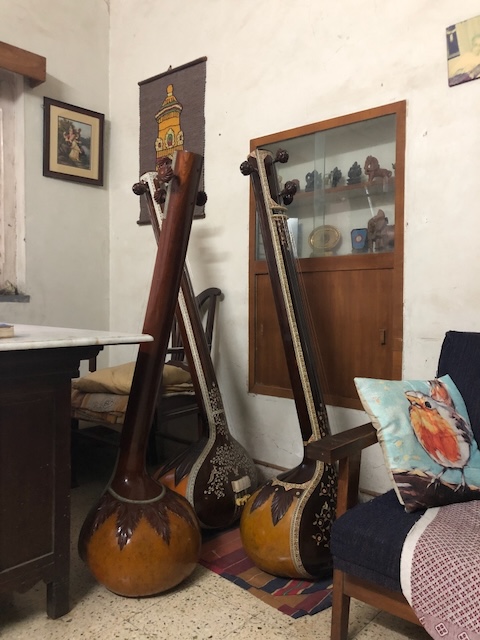
Hindustani Classical Music has been fascinating me for quite some time now. My first encounter with it was during the 4th International Time Perspective Conference in Nantes, France back in 2018. Since then I have switched from learning the Turkish flute, kaval, to learning Indian bamboo flute, bansuri, but mostly learning about the whole new universe that is contained inside the Hindustani Classical Music and its theory.

I will be slowly writing up about a few things that I have learned along the way and during my few stays in India in my newsletter on Substack – https://creativetimestudio.substack.com/

My friend and colleague, Nikhil Ghorpadkar, pakhavaj player from Pune, Maharashtra, India, most likely will be in Copenhagen in the first week of June – and we are thinking to organize a little workshop, an introduction to the Hindustani Classical Music, where I would be happy to share what I have discovered so far. Do let me know if you would like to join this workshop – be it in person or online.

Matter of Choice: Self-Exploration Workshop, May 2024

Recently the topic of choice has been very present in various domains around and therefore I have designed a workshop for self-reflection and self-exploration on this matter, the matter of choice. 

It would be great to see you there!

Kind regards,

Anna 

The Matter of Choice:
Self-reflection and self-exploration workshop

In-person in Copenhagen:

May 15 and May 22, 2024
18:00 to 20:00
Price: 550 DKK
Registration: https://system.easypractice.net/event/matter-of-choice-d56ed

Online:

May 14 and May 21, 2024
17:00 to 19:00
Price: 550 DKK
Registration: https://system.easypractice.net/event/matter-of-choice-9cd9a

This workshop is a space to reflect on the matter of choice, what do we associate it with. How does it manifest itself in our daily lives, in our professional and personal lives, in our emotional lives, where is it most present with us?

What are the choices we make or have already made and was there something that happened to us that we did not choose? How do we live those experiences?

Are our attitudes, moods and emotions, values and beliefs, a matter of choice?

Looking at the choices we make, how do they unfold in our personal history, but also in the history of the previous generations in our families, what is the greater context of choices (cultural, historical, etc.), where do those choices lead us? Is there a way to know it? How do we deal with the uncertainty as we must choose without knowing in advance about the outomce and consequences.

We might touch upon the topics of existential choice, conscious choice, values, time, comparisons we make, inner consent, sorrow, regret or joy, forgiveness and gratitude, freedom and responsibility.

Workshop leader:
Anna Sircova, PhD

Clinical psychologist, researcher and educator. Practices Existential Analysis and Logotherapy. Specializes in transitions and endings, psychology of time, existential questions. Passionate for cross-disciplinary approach, visual arts and other creative endeavors.

Her work concentrates on saying “yes” to life, on finding your personal time, core essence, meaning and fulfillment. Denmark is the sixth country that became her home (Latvia – USA – Russia – Spain – Sweden – Denmark). Founder of Creative Time Studio, with over 20 years of research experience in exploring the concept of time.

TEDx speaker, expert in creative processes, well-being, psychology of time, futurization and so much more.

Some things to contemplate on:

“Life is a sum of all your choices” ~ Pythagoras

Lewis Carroll’s Alice tells the Cheshire Cat: “I don’t much care where … so long as I get somewhere.“

“We are what we pretend to be, so we must be careful about what we pretend to be.” ~ Kurt Vonnegut, Mother Night

Theodor Geisel / Dr. Seuss “What Pet Should I Get?”
The cat?

Or the dog?
The kitten?
The pup?
Oh boy!

It is something
to make a mind up.
Then I looked at Kay.
I said, “What will we do?

I like all the pets that I see. So do you.
We have to pick ONE pet
and pick it out soon.
You know Mother told us
to be back by noon.”
“I will do it right now.

I will do it!” I said.
“I will make up the mind
that is up in my head.”
The dog…? Or the rabbit…?

The fish…? Or the cat…?
I picked one out fast,
and that that was that.

Baldwin
Nothing is more unbearable, once one has it, than freedom.

“When a man cannot choose, he ceases to be a man.” ~ Anthony Burgess, A Clockwork Orange

Workshop: Genogram Method with Ekaterina Zhuikova | Feb 20 or Feb 21 | Copenhagen

I cordially invite you to join me and my colleague, Ekaterina Zhuikova (Nafplio, Greece), at our event: The genogram method: History of family relationships and their impact on our lives

We will run the event a few times and in different languages – so hopefully, one or the other time would work for you! 

Dates: 

Monday, Feb 20, 11.00-13.00 – in English

Monday, Feb 20, 18.00-20.00 – in Russian

Tuesday, Feb 21, 18.00-20.00 – in English

Venue: Creative Time Studio, Rantzausgade 34A, st. tv (Det Blaa on the buzz)

Cost: 300 Dkk

Ekaterina is a Clinical Psychologist, Family and Child Psychotherapist with 20 years of counseling experience, focusing on studying the influence of family history on actual life patterns and the intercultural context in human life.

Together with Ekaterina, you will investigate the methods of exploring your family’s history to understand the need that arises in moments of life when we are trying to comprehend our identity and expand our sense of ourselves. 

With the genogram method, we will display the family history holistically, compare the dates of key family events, explore the losses and difficult events experienced by the family, and build a sociogram of the relationship between your family members.

Together with Ekaterina, we will go more in-depth into studying your family history using the genogram method. That visually will support us not only in learning about our ancestors but also about relationships, experiences, significant events in their lives, and how they influenced the family’s life, our ancestors’ decisions, and intra-family relations.

You will be able to learn from practicing the method and look at the principles of building a genogram. Looking deep into your family’s history is a need that arises in moments of life when we are trying to comprehend our identity and expand our understanding of ourselves.

Registration:

Feb 20, at 11.00 (in English)

Feb 20, at 18.00 (in Russian)

Feb 21, at 18.00 (in English) 

We hope that you will be able to join us and share your reflections with us!

Sincerely, 

Anna

Workshop: Introduction to Art-Therapy for Developmental Disorders | DIS – Study Abroad | 30.11.2022

Final workshop for DIS this semester was on Art-Therapy. During this workshop I have introduced the students to the basic principles of Art-Therapy, we talked about what mediums can be used in art therapeutic setting, some of the themes that can be explored with the help of art therapy and how a typical session would look like with kids or adults.

I have also presented various cases where I have used art therapy to illustrate the main underlying principle of the approach – that once we figure out how to make a symbolic change, we can also invite that change in real life.

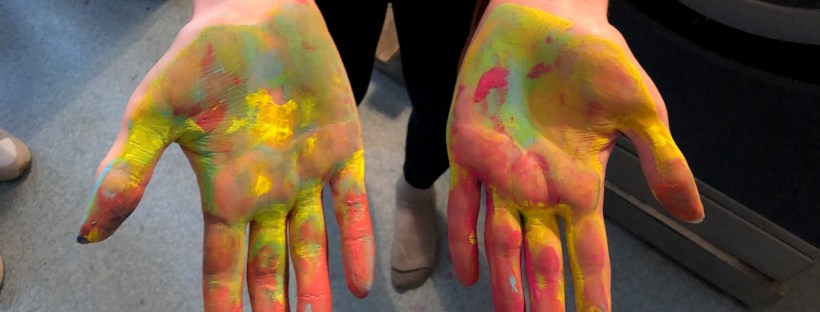
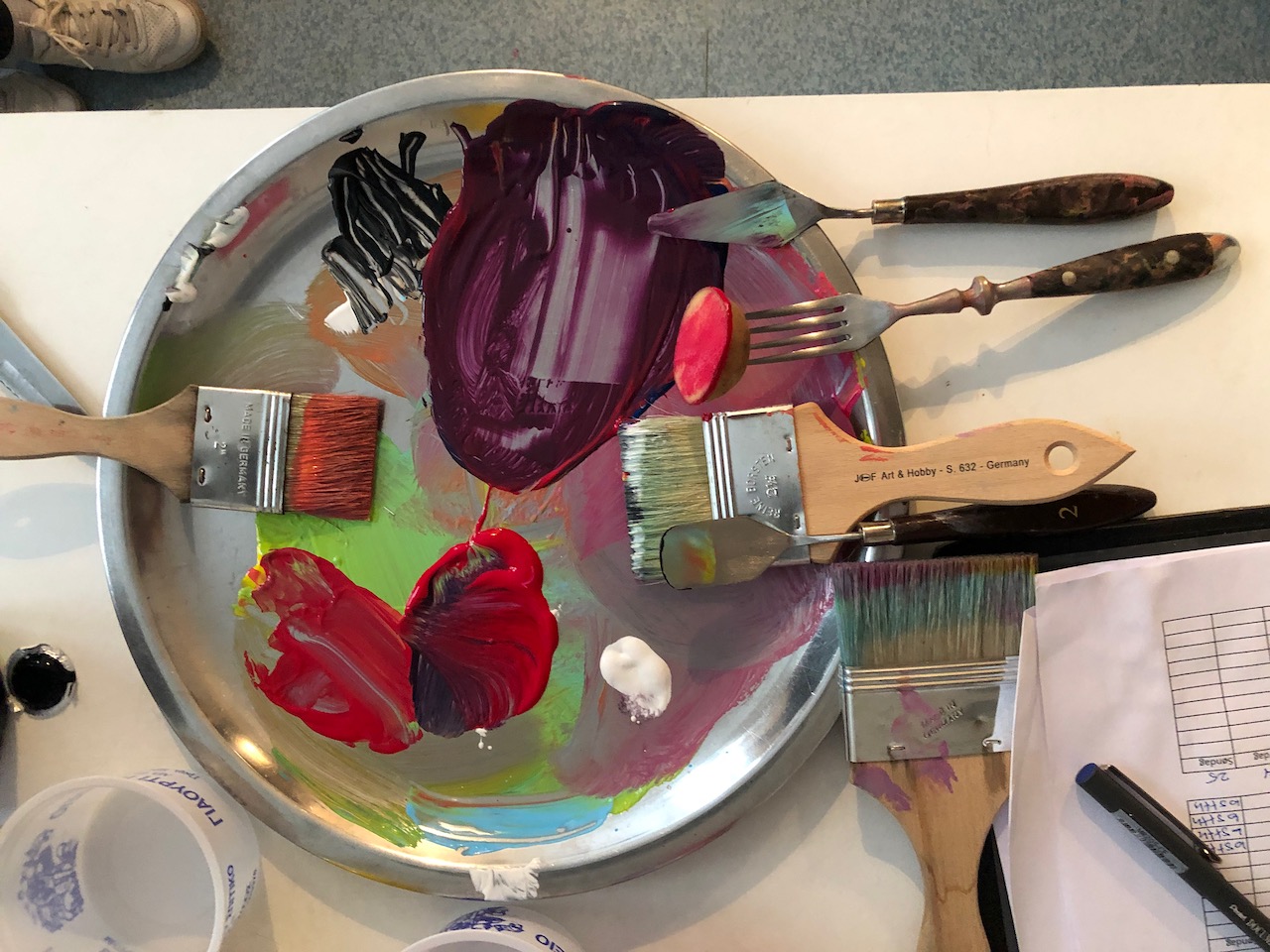
This fall semester is almost at the end, and students enjoyed their time in the Studio expressing various emotions and impressions that have accumulated throughout their study abroad stay in Denmark. They really got engaged in the activity and were totally ‘hands-on’. It is always such a pleasure to work with future colleagues!

Do reach out if you would like an art-therapy session yourself or as a workshop for educational purposes. I enjoy developing workshops, so I would be happy to fine-tune it to fit your organization, class or group’s needs.