“Where are you from?” can be the most difficult question to answer.
I come from a Russian family, but I was born in Latvia. When I went to study in the US for a year, I felt very Russian there. Later, life brought me to study in Russia, and I didn’t feel fully Russian at all. That’s where I felt more Latvian. For Latvia I am always Russian, due to the political landscape.
Since my parents are Russian, does that make me Russian as well? Then why did I feel so off when I actually was in Russia? Since I was born and lived for 20 years in Latvia, does that make me Latvian?.. I felt that I was definitely from Riga, but the whole of Latvia I wasn’t sure..
So I ended up being a Latvian-Russian.. or something of that sort.. somewhere in-between..
I lived 20 years in Latvia and then I left. 25 years I have lived elsewhere. Can I still say I am from Latvia? I don’t know that much about the political situation there anymore.. I don’t have close friends who still live there.. I love the landscape, and whenever I go I really feel that this is where I am from, this is my place. I cry when I am in the pine forest and then walk out to the beach and I am in awe with the horizon..
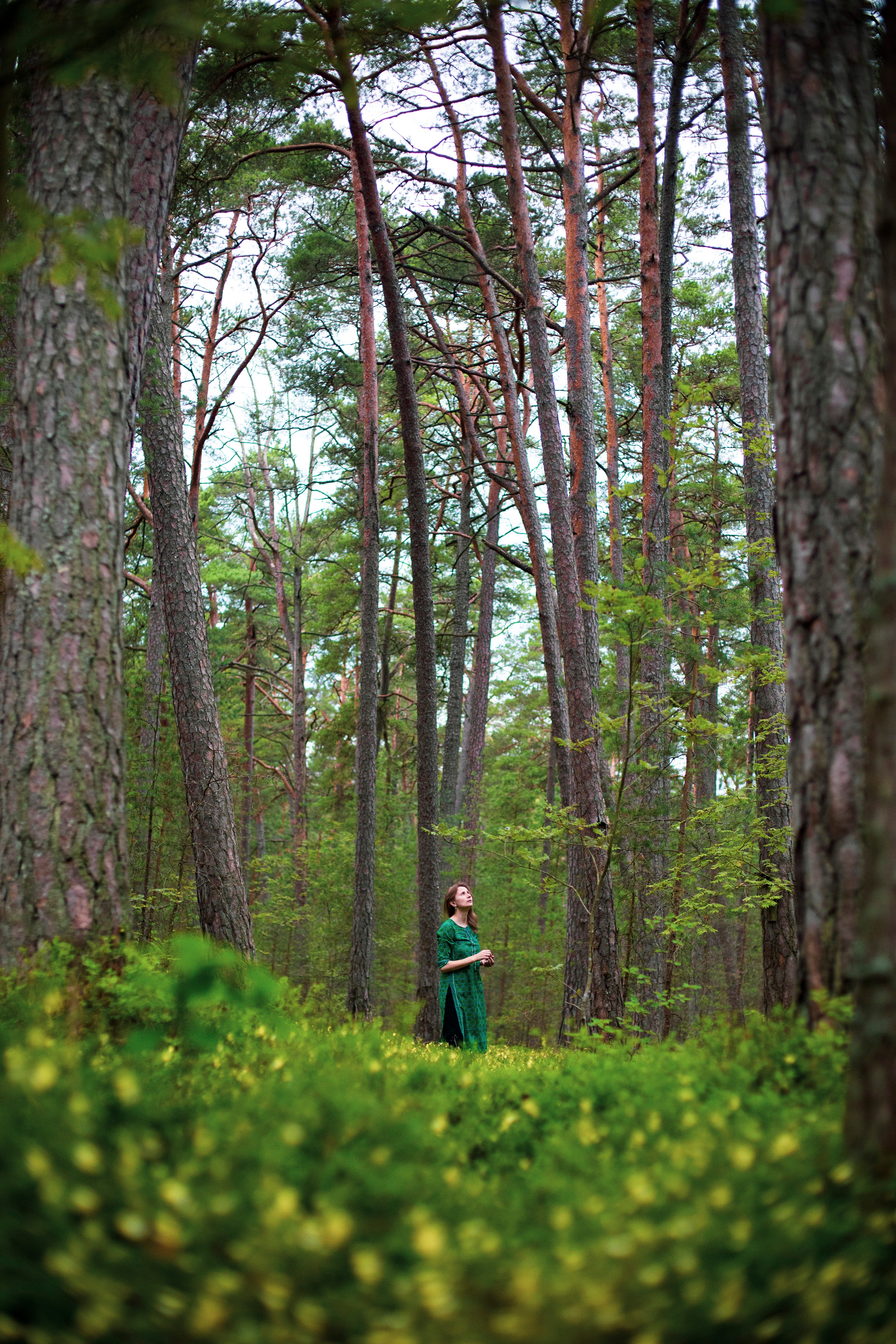
Cumulatively I lived 15 years in Scandinavia: 3 in Sweden and 12 in Denmark. That definitely left a mark on how I do things. Some of the local norms really did infuse in me. The way I plan, the way I communicate at work, the way I think about time and agreements. These and other things just settled in, slowly, over the years and became part of me..
So where am I from now?..
I think about the Danish poet Maja Lee Langvad here. She was born in Seoul in 1980, adopted at 3 months old, and grew up in Denmark. Her debut, Find Holger Danske (2004), takes its title from a legendary medieval warrior said to sleep beneath Kronborg Castle, waiting to wake and defend the nation in its darkest hour. Denmark’s King Arthur, essentially: the embodiment of what it means to be truly Danish. Which is exactly why Langvad’s gesture of renaming him “Holger Nondane” and “Holger Nowdane” cuts so deep. She takes the national myth and asks, flatly: where do I fit in this story? The book is a collage: adoption records, newspaper clippings, political documents, her own text, all cut together. She replaces words in common sayings to expose the prejudice hidden inside the language. The book won Denmark’s most significant debut prize.
From 2007 to 2010 she lived in Seoul to reconnect with her biological family. Out of that came Hun er vred (She Is Angry, 2014), a book about the transnational adoption industry. She describes a commercial system where children become export products, worth $15 million a year to South Korea. She is angry at the South Korean government, at Danish politics, at the biological family, the adoptive family, her friends, and at herself: “she is angry with herself for being angry.”
In her poem she asks:
What nationality would you say I am:
a. Danish?
b. Korean?
c. Both Danish and Korean?
d. Neither Danish nor Korean?
Later she reflects: “I saw myself as white, which sounds strange, because I could see that I was not when I saw myself in the mirror. I was not used to seeing other Asian or Korean bodies. There were almost exclusively white bodies: school teacher, dentist, friends, family, principal, parents’ friends. It was too wild an experience when I came to Seoul and suddenly mirrors my own body in a lot of others.”
You can listen to the interview with her here: http://k-10094.blogspot.dk/2009/12/148-voices-from-within-korean-diaspora.html (starts around 07:45)
She doesn’t feel comfortable in her adoptive country. She doesn’t feel comfortable in her country of origin, though she says in some ways she feels more at home in South Korea, finding its landscape better suited to her temperament than the flat Danish countryside. An unresolvable in-between.
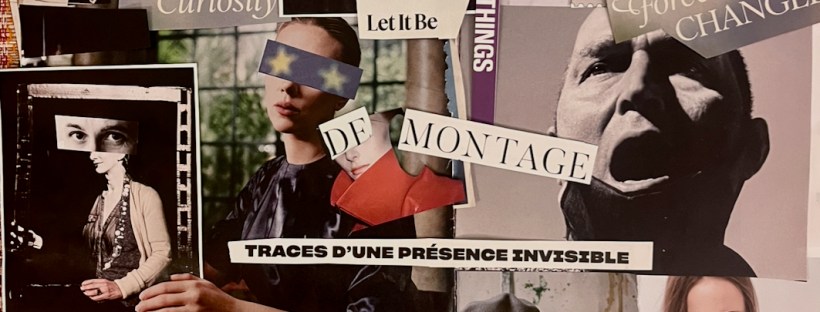
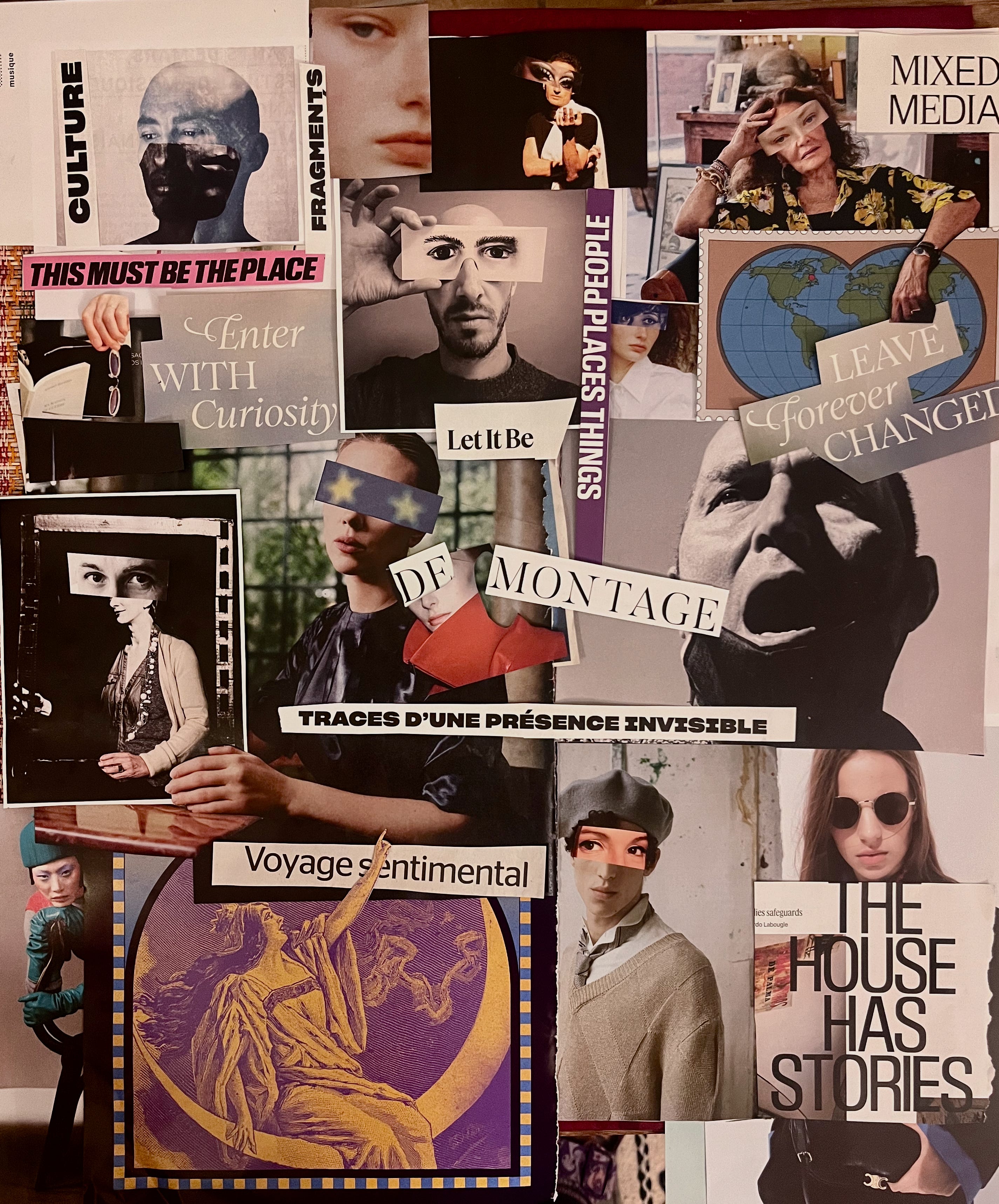
Feels familiar. The scale is different. The circumstances are very different. But the structure of the feeling, I think, is similar: we carry pieces from places and none of them adds up to one whole thing. It’s like a collage..
Langvad’s story is about displacement and the anger that comes with it. But there is another side to the collage: the part where you actually build something from the pieces.
In a study I did with my colleagues Elisabeth Schilling and Carolyn Patterson, we interviewed people living in Denmark and traced how their image of the future changed over time. What we observed was a “time-collage”: identity assembled from fragments of different pasts and different cultural contexts, layered with their ex-statuses. A person might carry their ex-Londoner self, their Greek roots, their role as a parent in Copenhagen, all on top of each other. Each new place added pieces while older ones shifted or faded.
Dorte, one of our respondents, grew up between Iraqi and Danish cultures. She had lived in Denmark for 19 years, the major part of her life, and still her name and her looks were a problem. “I never thought my name or looks could be a problem, but it is here in Denmark. It’s very.. people don’t talk about it. But it is there and we know it.” And yet she was actively constructing something from those two worlds: “For me, I come from a place that has two cultures, from that place grows a new culture. I’ve taken things from my own culture, from the Danish culture which I find really really beautiful…”
Cristofer, after years of moving between Greece, the UK, Saudi Arabia, Canada and Denmark, arrived at something quieter: “you always feel foreign, because you’re not from there, but somehow you feel that you have a sense of ownership where you are at.”
Two different things happening here. Dorte is building a new culture from the pieces. Cristofer is learning to feel at home without fully belonging. Both are forms of composing a life from fragments.
Yuliya Molina, a video artist originally from Mariupol, Ukraine, now living in Zagreb, Croatia, approaches this with a beautiful simplicity. In her short film NE-KDO (Some-body), instead of “or… or… or…” she chooses “and… and… and…” Russian and Ukrainian and Croatian. She arrives at her-self as a collage, all the pieces kept, nothing subtracted:
My friends at Hamide Design Studio in Copenhagen know this from their own skin. When they moved to Scandinavia, they were immediately put in what they call “the Turkish women box”: oppressed, uneducated, not feminist, Muslim. Their initial interactions were more like an interrogation based on a checklist than actual curiosity. So they started I Feel From, a social movement that changes the conversation entirely. Instead of “where are you from?” (the roots, the box, the passport), they ask: where do you feel from?
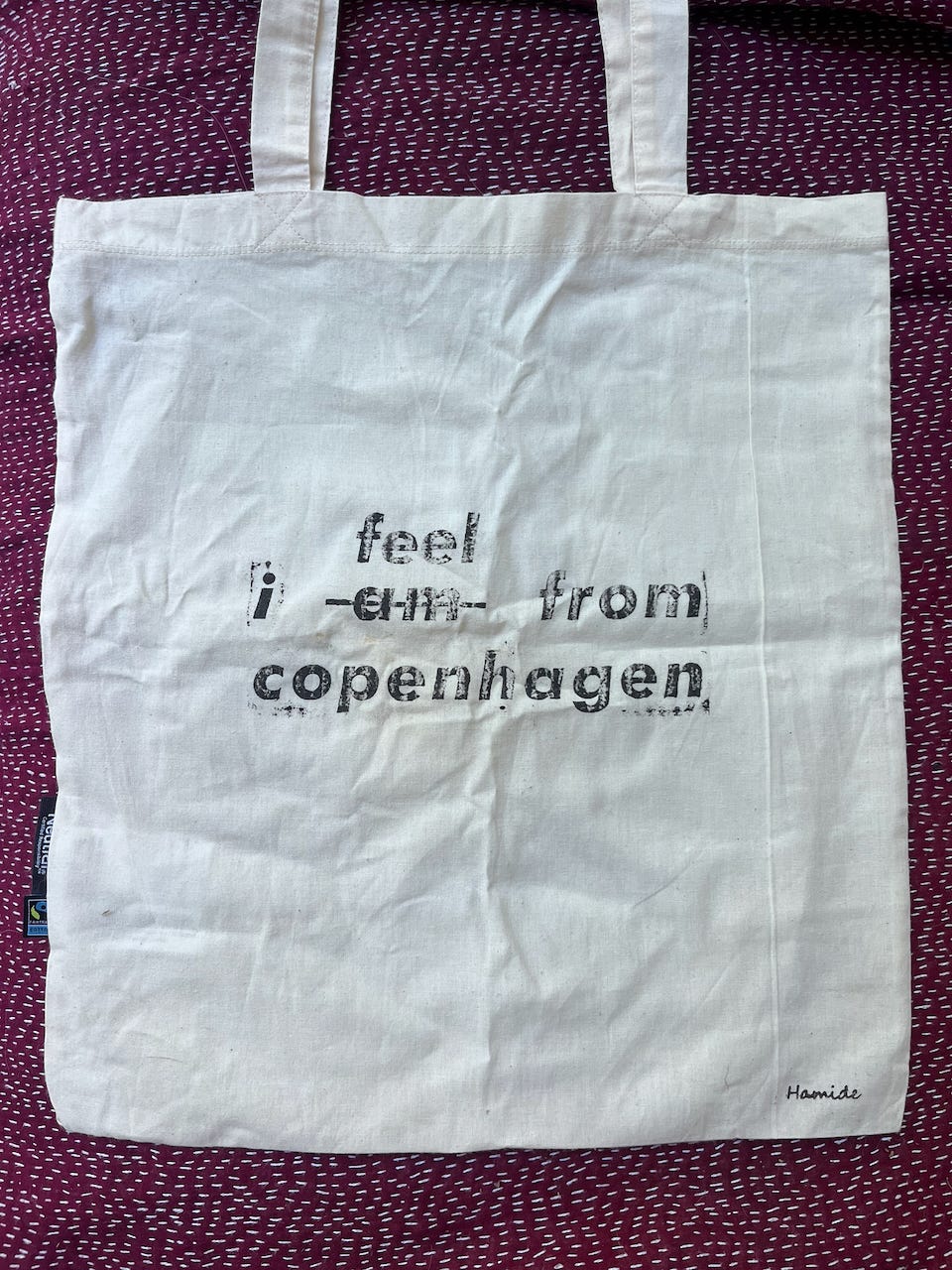
I invited them into my classroom to run a workshop, where we were encouraged to make our own passports. The answer is rarely one country. It might be a city, a kitchen, a language, a season. A grandmother’s garden. A particular quality of light. The passports became a social movement, workshops, exhibitions. I love it because it gives people a simple, concrete way to hold the multiplicity. You don’t have to pick one answer. It can be a plural one.. Instead of the Aristotelean logic of “either… or…”, it’s the Arabic logic of “and … and …”. Where the in-between can be a whole entity also..
In my practice I work with people who carry multiple countries inside them. They grew up somewhere, studied somewhere else, built a career in a third place, fell in love in a fourth. They code-switch between languages, between cultural codes, between versions of themselves. Sometimes they come to therapy because they feel they don’t fully belong anywhere. There is a grief in it for a belonging that maybe never fully existed.
What I see is that many of them have already done something they don’t give themselves credit for: they have built a self out of fragments, and that self works. It knows how to be in a Danish meeting and at a Russian kitchen table and at a French bureaucratic counter. But they don’t always see this as a strength because the dominant narrative says you should be from somewhere. One place. One clear answer. A box.
I don’t have a clear answer either. I know I cry in the Latvian pine forest. I know I think about time both the Scandinavian and Slavic way. I know my grief speaks Russian. I know that France, my 7th country, is slowly becoming something too, though I can’t name what yet.
So maybe the right question to ponder about is the one Hamide asks: where do you feel from?
If this resonates and you’d like to explore questions of identity and belonging, contact me. I work with individual clients online and in Lyon. I am also open to leading workshops on identity, cultural transitions and belonging with organizations, schools and small groups.
References
Langvad, M. L. (2004). Find Holger Danske. Gyldendal.
Langvad, M. L. (2014). Hun er vred: En personlig beretning om transnational adoption. Gyldendal.
Sircova, A., Patterson, C., Schilling, E. (2020). Constructing biography – constructing identity: Changeable concept of the Future in Migrants. Frontiers in Time Research–Einführung in die interdisziplinäre Zeitforschung, 101-132. DOI:10.1007/978-3-658-31252-7_6
Hamide Design Studio. I Feel From. https://www.hamide.dk/work/i-feel-from/ and https://www.hamide.dk/work/i-feel-from-social-movement/






 Creative Time Studio