On composite identity

“Where are you from?” can be the most difficult question to answer.

I come from a Russian family, but I was born in Latvia. When I went to study in the US for a year, I felt very Russian there. Later, life brought me to study in Russia, and I didn’t feel fully Russian at all. That’s where I felt more Latvian. For Latvia I am always Russian, due to the political landscape.

Since my parents are Russian, does that make me Russian as well? Then why did I feel so off when I actually was in Russia? Since I was born and lived for 20 years in Latvia, does that make me Latvian?.. I felt that I was definitely from Riga, but the whole of Latvia I wasn’t sure..

So I ended up being a Latvian-Russian.. or something of that sort.. somewhere in-between..

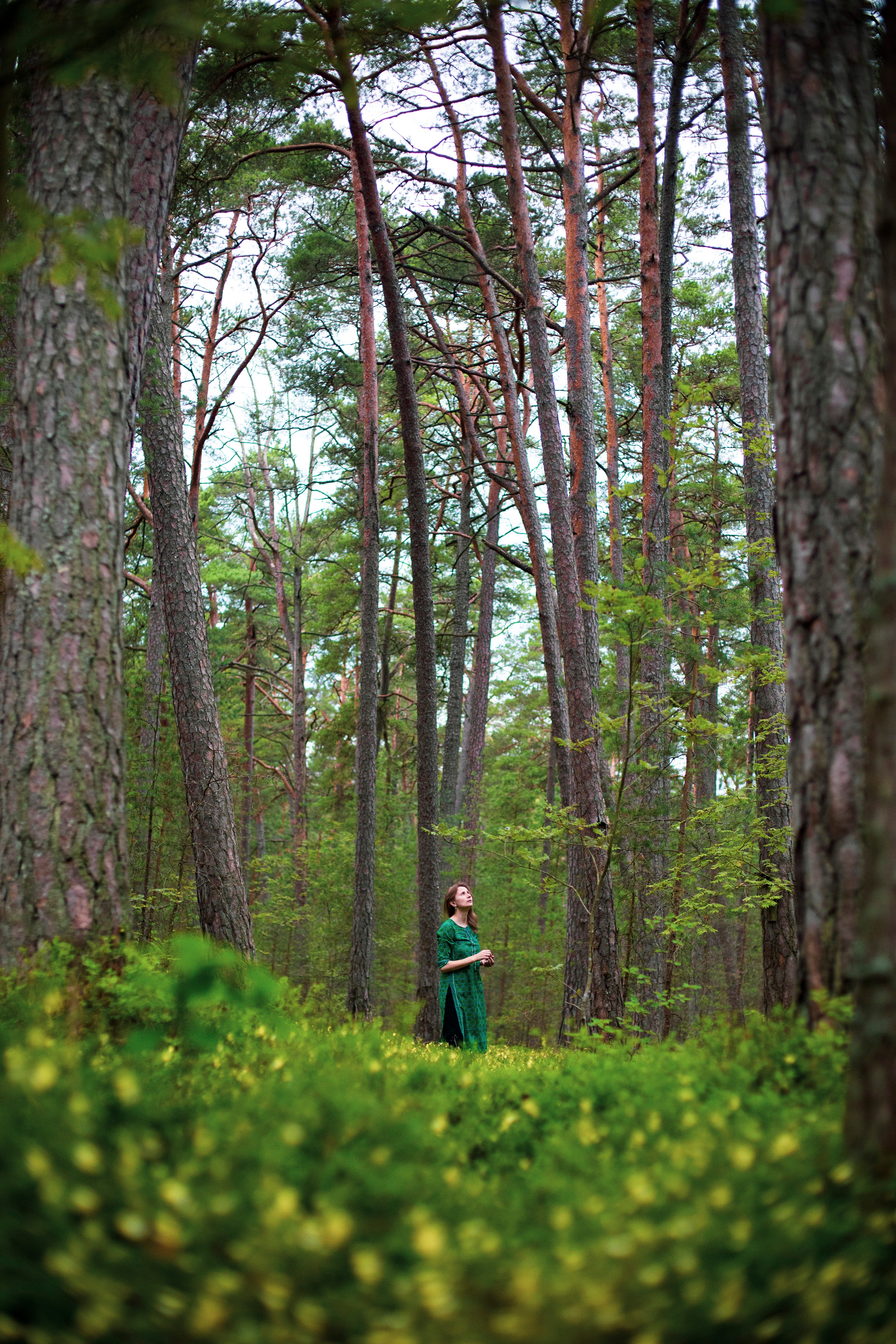
I lived 20 years in Latvia and then I left. 25 years I have lived elsewhere. Can I still say I am from Latvia? I don’t know that much about the political situation there anymore.. I don’t have close friends who still live there.. I love the landscape, and whenever I go I really feel that this is where I am from, this is my place. I cry when I am in the pine forest and then walk out to the beach and I am in awe with the horizon..
Cumulatively I lived 15 years in Scandinavia: 3 in Sweden and 12 in Denmark. That definitely left a mark on how I do things. Some of the local norms really did infuse in me. The way I plan, the way I communicate at work, the way I think about time and agreements. These and other things just settled in, slowly, over the years and became part of me..

So where am I from now?..

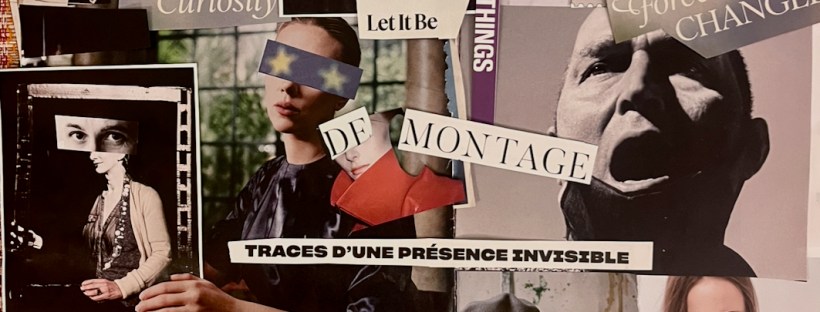
I think about the Danish poet Maja Lee Langvad here. She was born in Seoul in 1980, adopted at 3 months old, and grew up in Denmark. Her debut, Find Holger Danske (2004), takes its title from a legendary medieval warrior said to sleep beneath Kronborg Castle, waiting to wake and defend the nation in its darkest hour. Denmark’s King Arthur, essentially: the embodiment of what it means to be truly Danish. Which is exactly why Langvad’s gesture of renaming him “Holger Nondane” and “Holger Nowdane” cuts so deep. She takes the national myth and asks, flatly: where do I fit in this story? The book is a collage: adoption records, newspaper clippings, political documents, her own text, all cut together. She replaces words in common sayings to expose the prejudice hidden inside the language. The book won Denmark’s most significant debut prize.

From 2007 to 2010 she lived in Seoul to reconnect with her biological family. Out of that came Hun er vred (She Is Angry, 2014), a book about the transnational adoption industry. She describes a commercial system where children become export products, worth $15 million a year to South Korea. She is angry at the South Korean government, at Danish politics, at the biological family, the adoptive family, her friends, and at herself: “she is angry with herself for being angry.”

In her poem she asks:

What nationality would you say I am:

a. Danish?

b. Korean?

c. Both Danish and Korean?

d. Neither Danish nor Korean?

Later she reflects: “I saw myself as white, which sounds strange, because I could see that I was not when I saw myself in the mirror. I was not used to seeing other Asian or Korean bodies. There were almost exclusively white bodies: school teacher, dentist, friends, family, principal, parents’ friends. It was too wild an experience when I came to Seoul and suddenly mirrors my own body in a lot of others.”

You can listen to the interview with her here: http://k-10094.blogspot.dk/2009/12/148-voices-from-within-korean-diaspora.html (starts around 07:45)

She doesn’t feel comfortable in her adoptive country. She doesn’t feel comfortable in her country of origin, though she says in some ways she feels more at home in South Korea, finding its landscape better suited to her temperament than the flat Danish countryside. An unresolvable in-between.

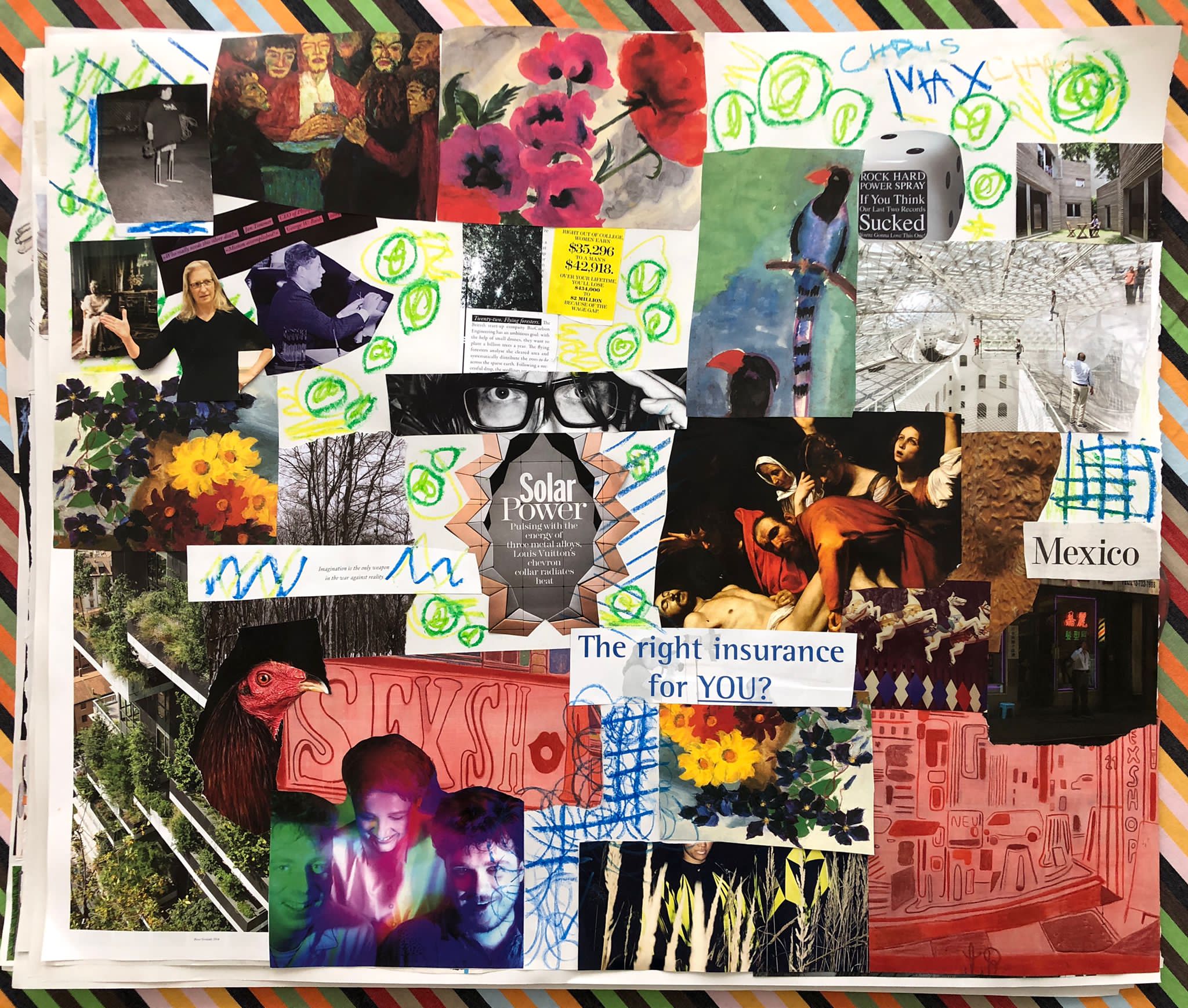
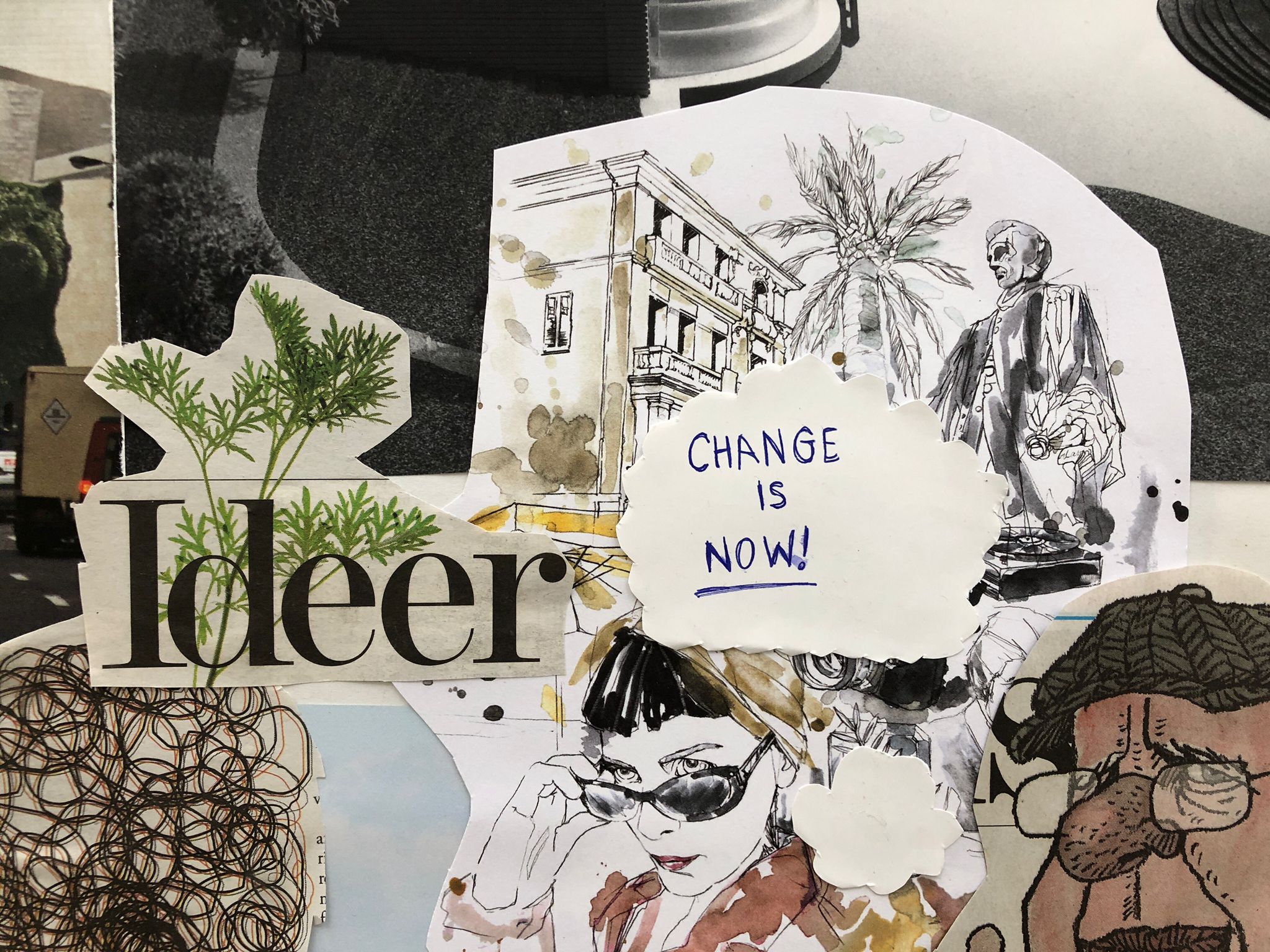
Feels familiar. The scale is different. The circumstances are very different. But the structure of the feeling, I think, is similar: we carry pieces from places and none of them adds up to one whole thing. It’s like a collage..

Langvad’s story is about displacement and the anger that comes with it. But there is another side to the collage: the part where you actually build something from the pieces.

In a study I did with my colleagues Elisabeth Schilling and Carolyn Patterson, we interviewed people living in Denmark and traced how their image of the future changed over time. What we observed was a “time-collage”: identity assembled from fragments of different pasts and different cultural contexts, layered with their ex-statuses. A person might carry their ex-Londoner self, their Greek roots, their role as a parent in Copenhagen, all on top of each other. Each new place added pieces while older ones shifted or faded.
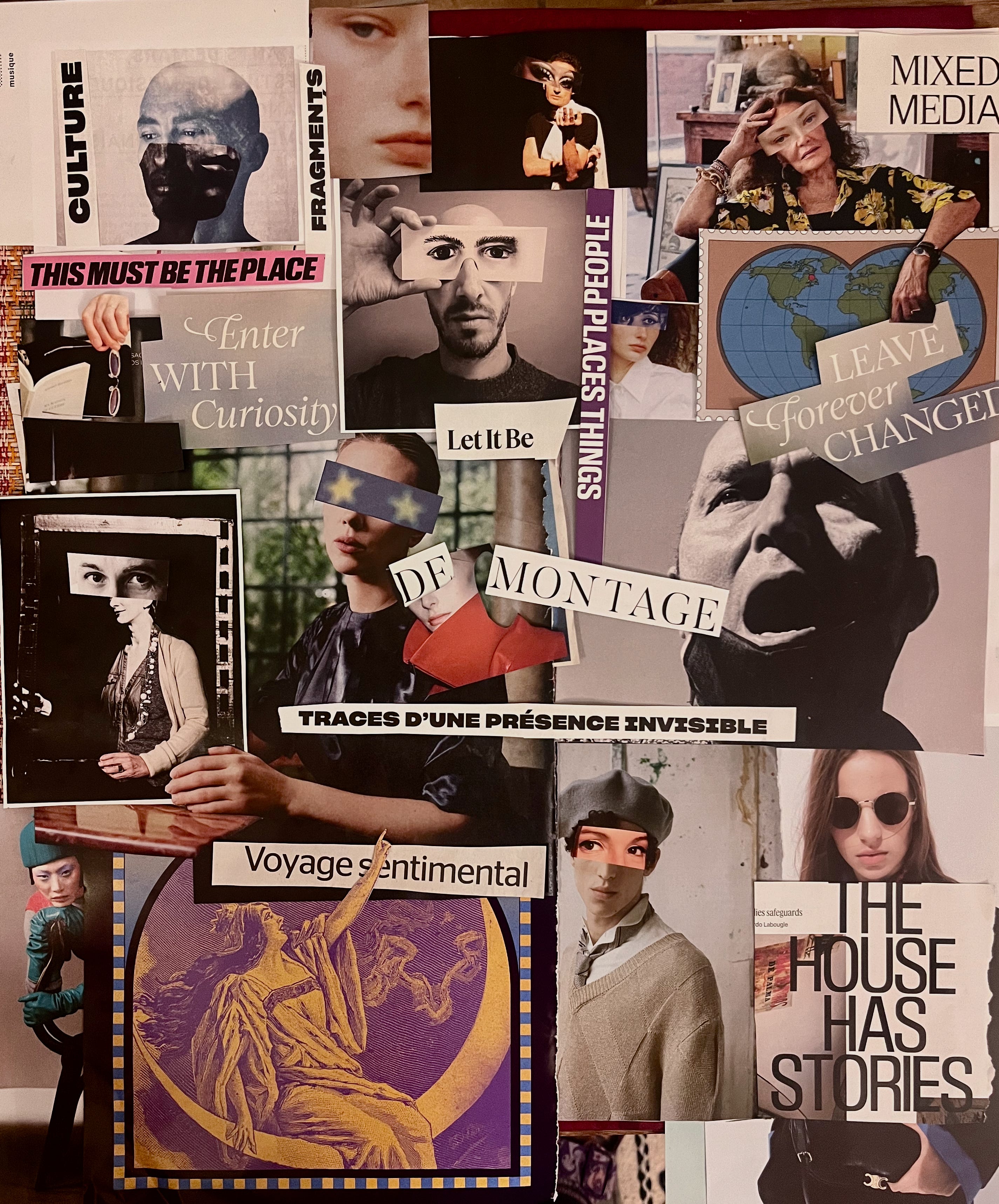
Dorte, one of our respondents, grew up between Iraqi and Danish cultures. She had lived in Denmark for 19 years, the major part of her life, and still her name and her looks were a problem. “I never thought my name or looks could be a problem, but it is here in Denmark. It’s very.. people don’t talk about it. But it is there and we know it.” And yet she was actively constructing something from those two worlds: “For me, I come from a place that has two cultures, from that place grows a new culture. I’ve taken things from my own culture, from the Danish culture which I find really really beautiful…”

Cristofer, after years of moving between Greece, the UK, Saudi Arabia, Canada and Denmark, arrived at something quieter: “you always feel foreign, because you’re not from there, but somehow you feel that you have a sense of ownership where you are at.”

Two different things happening here. Dorte is building a new culture from the pieces. Cristofer is learning to feel at home without fully belonging. Both are forms of composing a life from fragments.

Yuliya Molina, a video artist originally from Mariupol, Ukraine, now living in Zagreb, Croatia, approaches this with a beautiful simplicity. In her short film NE-KDO (Some-body), instead of “or… or… or…” she chooses “and… and… and…” Russian and Ukrainian and Croatian. She arrives at her-self as a collage, all the pieces kept, nothing subtracted:

My friends at Hamide Design Studio in Copenhagen know this from their own skin. When they moved to Scandinavia, they were immediately put in what they call “the Turkish women box”: oppressed, uneducated, not feminist, Muslim. Their initial interactions were more like an interrogation based on a checklist than actual curiosity. So they started I Feel From, a social movement that changes the conversation entirely. Instead of “where are you from?” (the roots, the box, the passport), they ask: where do you feel from?
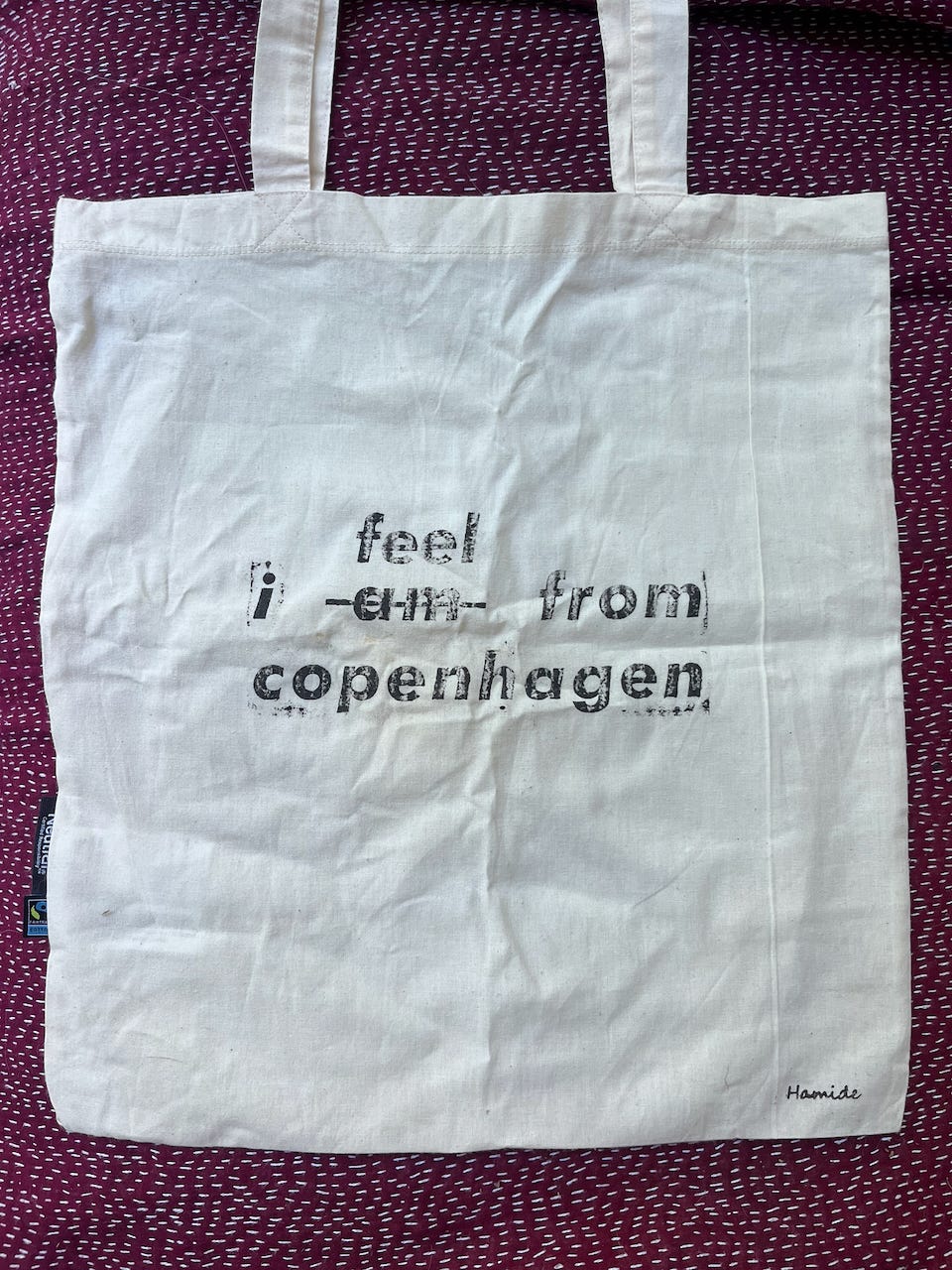
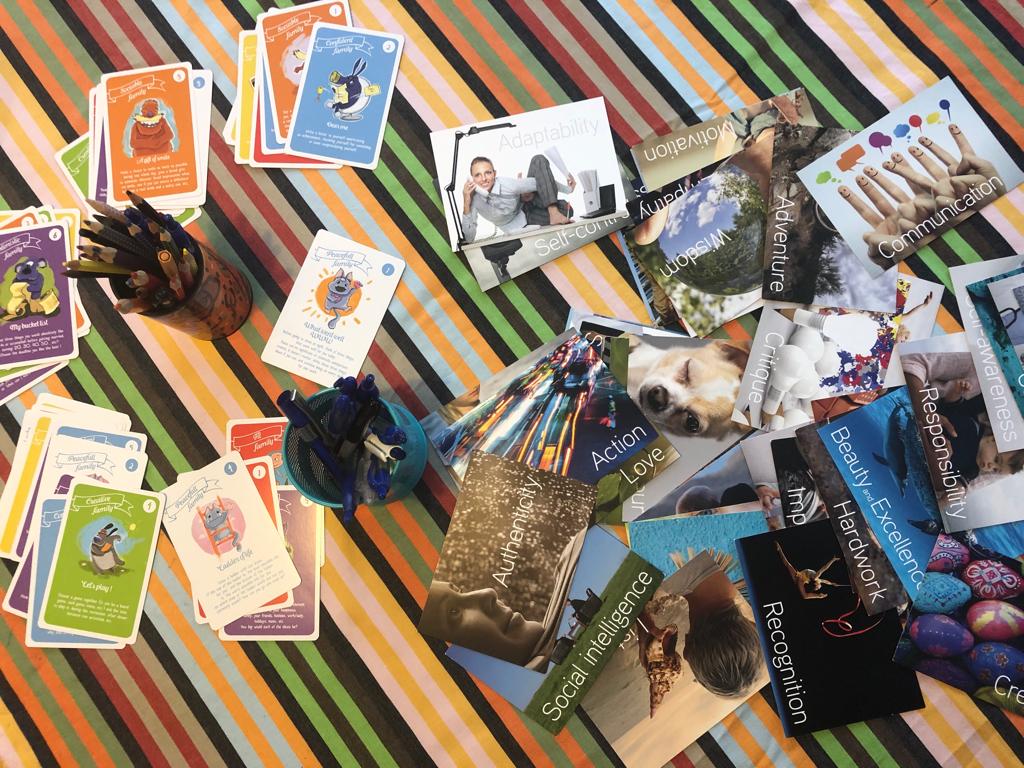
I invited them into my classroom to run a workshop, where we were encouraged to make our own passports. The answer is rarely one country. It might be a city, a kitchen, a language, a season. A grandmother’s garden. A particular quality of light. The passports became a social movement, workshops, exhibitions. I love it because it gives people a simple, concrete way to hold the multiplicity. You don’t have to pick one answer. It can be a plural one.. Instead of the Aristotelean logic of “either… or…”, it’s the Arabic logic of “and … and …”. Where the in-between can be a whole entity also..

In my practice I work with people who carry multiple countries inside them. They grew up somewhere, studied somewhere else, built a career in a third place, fell in love in a fourth. They code-switch between languages, between cultural codes, between versions of themselves. Sometimes they come to therapy because they feel they don’t fully belong anywhere. There is a grief in it for a belonging that maybe never fully existed.

What I see is that many of them have already done something they don’t give themselves credit for: they have built a self out of fragments, and that self works. It knows how to be in a Danish meeting and at a Russian kitchen table and at a French bureaucratic counter. But they don’t always see this as a strength because the dominant narrative says you should be from somewhere. One place. One clear answer. A box.

I don’t have a clear answer either. I know I cry in the Latvian pine forest. I know I think about time both the Scandinavian and Slavic way. I know my grief speaks Russian. I know that France, my 7th country, is slowly becoming something too, though I can’t name what yet.

So maybe the right question to ponder about is the one Hamide asks: where do you feel from?

If this resonates and you’d like to explore questions of identity and belonging, contact me. I work with individual clients online and in Lyon. I am also open to leading workshops on identity, cultural transitions and belonging with organizations, schools and small groups.


References

Langvad, M. L. (2004). Find Holger Danske. Gyldendal.

Langvad, M. L. (2014). Hun er vred: En personlig beretning om transnational adoption. Gyldendal.

Sircova, A., Patterson, C., Schilling, E. (2020). Constructing biography – constructing identity: Changeable concept of the Future in Migrants. Frontiers in Time Research–Einführung in die interdisziplinäre Zeitforschung, 101-132. DOI:10.1007/978-3-658-31252-7_6

Hamide Design Studio. I Feel From. https://www.hamide.dk/work/i-feel-from/ and https://www.hamide.dk/work/i-feel-from-social-movement/

Arriving into 2025: Where is My Time?

Invitation to a self-reflection and self-exploration workshop

We are in the 4th week of the New Year, 2025. I would like to offer a time and space to reflect on how this year can unfold for us.

Something to ponder about:

“Life takes place in time and life will appear where I have time. ..”

“That which I have time for is that which I live for. “

In this workshop I would like us to explore the mysterious concept of time, consider it from the psychological perspective. It is also a time and space to reflect on what you wish for yourself to happen during this new year, how to find time for it, or how to create conditions to give your time to those projects, people and wishes.

I have a few reflection questions to discuss in the group format. I have a few hands-on activities to do on own and perhaps together. I have quite a few different tools I can tell you about how to become friends with time.

I am thinking about an in-person workshop in Copenhagen either in the evening of Wednesday, February 5, 2025 (tentatively 17 to 19ish) or in the morning of Saturday, February 8, 2025 (10.00 to 13.00).

Let me know if you would like to attend and when it best suits you. Otherwise I am in Copenhagen between February 3 and February 10 and still have a few openings for in-person individual sessions.

Looking forward to hearing from you! And hope to see you while I am in Copenhagen!

Kind regards,

Anna

On Environmental Depression

Recently a colleague reached out with a question if I could lead a session on climate/ environmental depression during class time as students have specifically requested a psychologist to talk to them about it.

Some of the questions asked were:

  • How to manage climate anxiety?
  • How to avoid depression, when working in climate science and ecology?
  • How to cope with feelings, while maintaining objectivity in work? How to avoid nihilism and despair? 
  • How can one working in the environmental science field manage a good work life balance, such as being able to enjoy life and stay happy knowing all the scary things we learn and see on a daily basis. 

We talked about the foundation on which ‘non-anxiety’ can be built, such as having the feeling of support, space and protection, trust and endurance. In terms of working professionally with the highly touching topics – to be able to protect oneself, to know own borders, capacities, abilities and inabilities, personal scope – what is possible for me personally in this particular context and circumstances? I shared my own experiences in becoming a clinical psychologist – while visiting various clinics during my studies I have realized that I am not able to work in child psychiatry – I couldn’t see myself as able to provide good help there. I have huge respect for those colleagues who can.

We talked about the importance of:

  • preventive measures of emotional burnout – possibility of having something similar to supervision process, peer groups or intervisions.
  • knowing own values – knowing what is important for oneself and why it is important? Doing check-ins with oneself by the end of the day: Have I lived my values today?
  • being selective with consuming the information that comes in from various directions. Not reading the news everyday and really paying attention to the news with positive initiatives, because they are there, but might not have all the spotlight attention on them.
  • finding the healthy outlet for difficult emotions that might be directed to specific people, entities, previous generations. Emotions need to be recognized and then it becomes possible to see the situation in more productive and solution oriented way.

And most importantly to give oneself permission to live. To be true to own values and not to get overwhelmed by new contexts, making our best in not falling into conformism. To remember that even the small actions are important, as they continue to live in one form or the other.

If your organization has a similar need – to have a questions and answers session on the topic of climate / environmental depression or dark future anxiety – please reach out!

WHAT AM I WORKING ON NOW – FALL 2022

During Fall 2022 I am:

DEVELOPING

A unique event in Greece tailored for those who want to learn something new about themselves, get inspiration, and find new ways of working. In collaboration with Ekaterina Zhuikova, clinical psychologist, family and child psychotherapist. June 27 to July 2, 2023, Greece. More info to follow soon. ..

Training course on Balanced Time Perspective coaching for practitioners – end of March 2023. More info to follow soon.

Running my private psychotherapy practice in Copenhagen

I specialize in transitions and endings, psychology of time and Balanced Time Perspective coaching and existential questions. I work in English and Russian, both in-person and online. I work with individuals and couples. Currently, I also work Pro Bono with people affected by the war in Ukraine. I have some availability – feel free to reach out

LEARNING

This year in my Logotherapy and Existential-Analytical Psychotherapy course we have started the clinical part of the education. Spring modules were on anxiety. The September 2022 module was mostly dedicated to depression, how it is viewed in existential analysis. The November 2022 module will be on treatment of depression.

Looking forward to joining the group in-person in London!

TEACHING

This Fall, I was running some workshops and guest lectures for various courses at DIS:

Exhibiting

In the month of December 2022, some of my art will be exhibited at the Gadens Galleri on Ryesgade 4, 2200, Copenhagen, Denmark. Opening will be on Friday, December 9, 2022. More info to follow soon.

***

How do I manage all of the above and a few things that were left out? I love working with my version of the bullet journal and I also follow my own medicine regarding taking the creative breaks.

I am available for giving workshops on:

  • Balanced Time Perspective and its role in Mental Health
  • Futurization: Images of the Future and Future Scenarios to develop sustainable attitudes and behavior
  • How to deal with culture shock
  • Using creativity as a resource.

I would be thrilled to develop a tailored talk / workshop regarding time, creativity and your field of interest.

Best ways to keep up with my progress and stay in touch with me:

  • subscribe to my newsletter with my recent discoveries and updates & invitations to my exhibitions / pop-up galleries openings, events I’m organizing / hosting, talks & workshops I’m giving, etc.
  • follow me on LinkedInInstagram or Facebook

Find out more about me on my about page.

Field Study: Applied Effects of Psychology of Time for Environmental Philosophy | DIS – Study Abroad | 26.10.2022

Thank you for last week’s event with a change of scenery! 

On Wednesday morning, with DIS: Copenhagen, we found ourselves in a bus driving outside Copenhagen for an adventure!

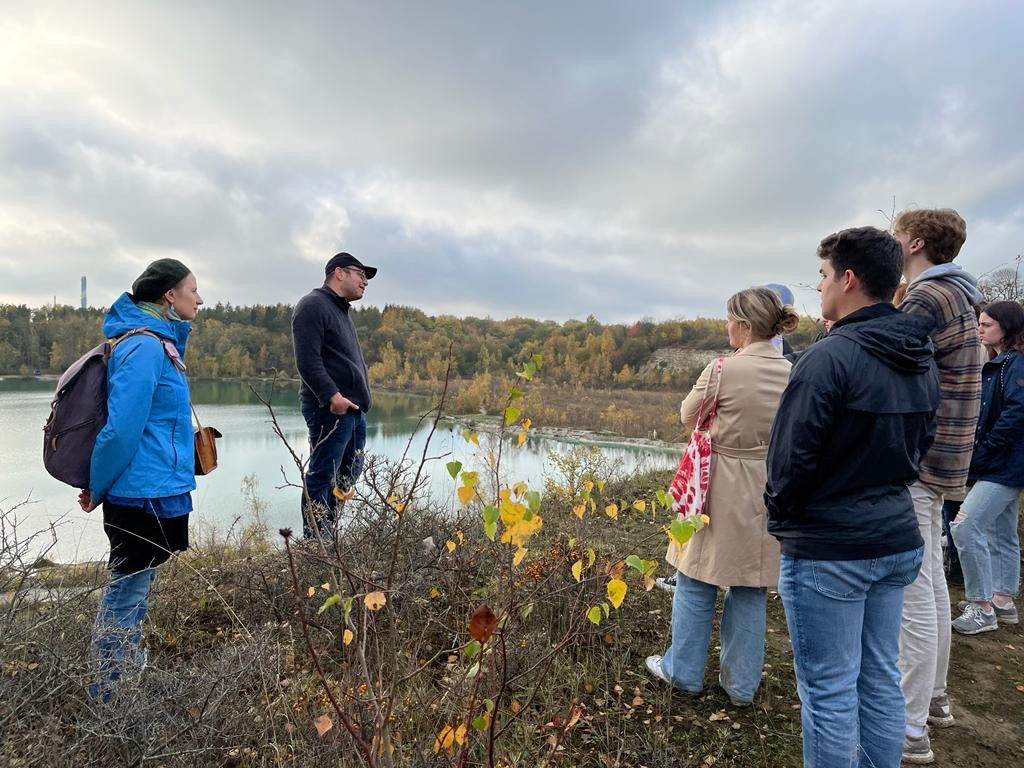
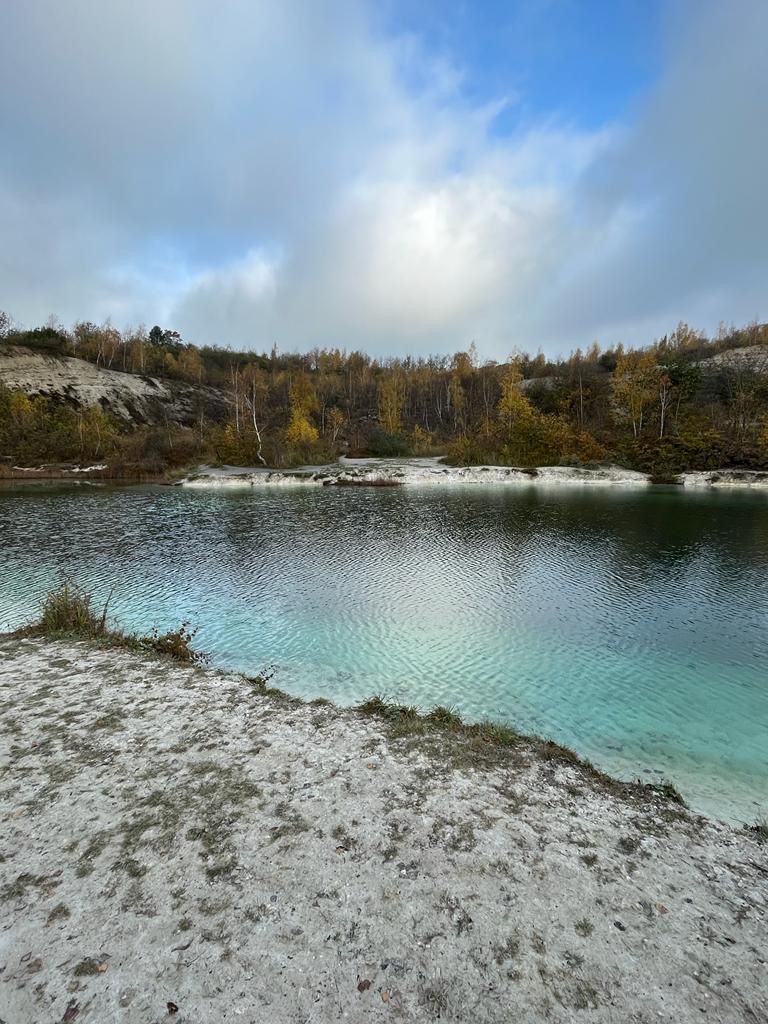
The event took place at Karlstrup Kalkgrav lake, where students were able to learn about geology, the history of the lake, and the psychology of time while walking in nature and going with the flow. 

We looked into:

  • Balanced Time Perspective in Therapy;
  • Time perspective theory;
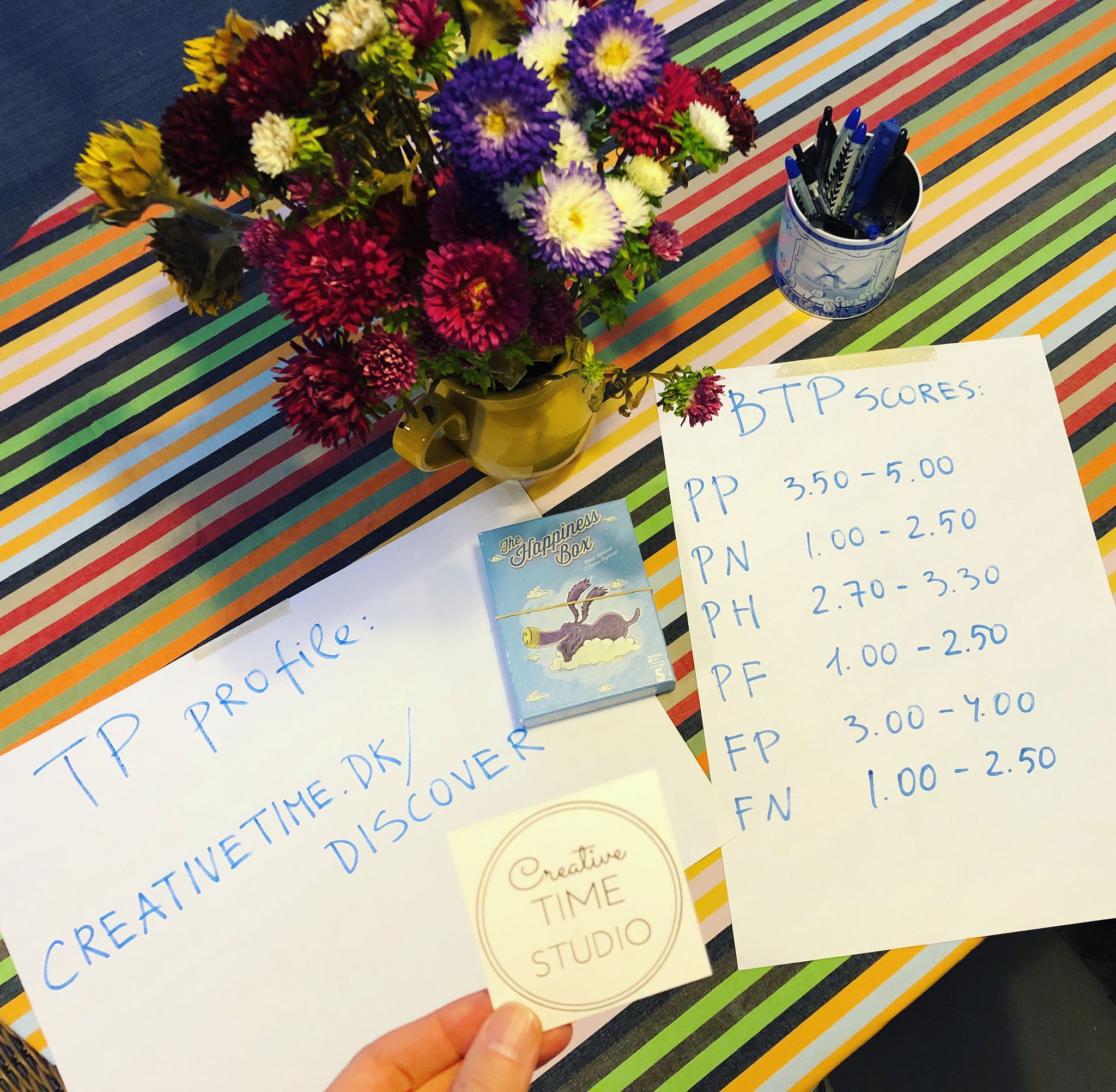
  • Balanced time perspective profile;
  • Personal and global future;
  • Living in the present.

The main activity was a mindful walk in silence while experiencing living in the present, contemplating, and observing the surroundings. After this, students shared their feelings, impressions, and diverse points of view.

This activity allowed students to reflect and become more conscious of their views on the human-made lake and its nature.

As a result, students discovered that while having different thoughts about it and listening to totally different experiences of others, all of them were right, depending on their past experiences. 

It was wonderful to be a part of this adventure, and we look forward to hearing more about students observing their lives and reflecting on their Time Perspective Profile to become more balanced. 

If you are a practitioner (psychologist, therapist or coach) and interested to learn more about the Balance Time Perspective Coaching please join our educational seminar on it. 

If you are interested in self-development and learning more about your personal time perspective profile and how to reach more balance, you can join the course “Where is my time?” or reach out for an individual consultation. 

Many of the Creative Time Studio’s workshops are tailor-made, so don’t hesitate to reach out by requesting a workshop that fits your organization, class or group’s needs.

Workshop: Futurization: Creating the Space for the Future | Sustainable Development in Northern Europe course, DIS | 28.09.2022

Recently the DIS students from the course Sustainable Development in Northern Europe participated in our workshop on Futurization: Creating the Space for the Future.

We looked into the images of our own personal future and those of the global future. There was a stark difference between the two – personal future being much more positive and global future images were mostly negative. Similarly to my earlier research results presented at the TEDx Vilvoorde.

We looked into the common challenges associated with futurization:

  • lack of future discourse – no future language, absence of a tool to talk about it, except for concepts like ‘pension’ or ‘mortgage’ (are those effective?);
  • lack of our cognitive capacity to imagine long-term future;
  • images of the global future can be very scary, anxiety-provoking, or leave us feeling hopeless;
  • our defense mechanisms protect us from such emotions, but also make us shortsighted.

We looked at our difficult emotions, but have also looked at what can actually be done by us in the context of the current situation. We talked about the importance of knowing our own values and how to develop personal strengths supporting them. 

Creating a safe space for expressing the emotions, imaginaries, hopes, and, most importantly, fears associated with the future and ‘futurization’, allowed for more productive ideas and solutions to emerge among the participants.

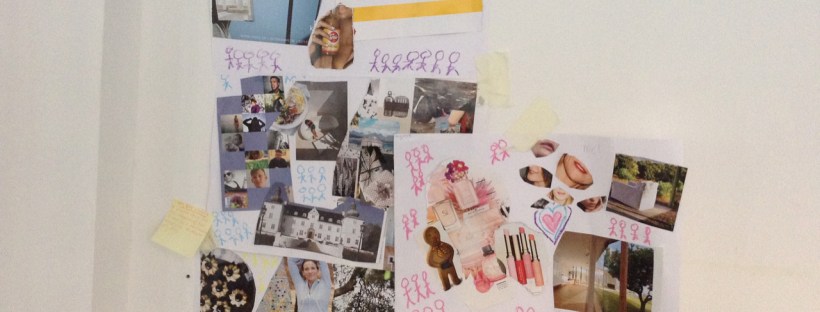
Finally, we looked into the ideal future, a combination of personal and global images, by visualizing it. Creating and discussing collages were valuable tools that helped the students to realize their thoughts about the future and to find what can support them in developing strategies for a better future. 

As a result, students shared how they can keep the positive side of looking at their personal and global future and the importance of making change individually on a small scale.

We look forward to seeing how our workshop will inspire our young participants to create more sustainable personal and global futures.

If you are interested in self-development, learning more about personal and global future, and sustainable development – join our future workshops or reach out for a tailor-made workshop that fits your organization, class, or group’s needs.

Balanced Time Perspective in Therapy and Coaching workshop | DIS – Study Abroad | 05.10.2022

Thank you, #HappinessLab from DIS – Study Abroad Copenhagen, for joining us this week at the Balanced Time Perspective in Therapy and Coaching workshop.

It was a pleasure to educate the new generation about time perspective theory, balanced time perspective profile and introduce various practical interventions.      

Students got to see different cases, for example, a typical profile of someone struggling with anxiety, depressive episode or work-related stress and burnout, etc. 

We looked into the process of working with a prospective client step-by-step: 

– Performing initial assessment of the time perspective profile.

– Working with the profile: taking into account the individual, culture and context of the current situation.

– Learned about ‘reading between the lines’ of the profile numbers.

– Discussed and exercised various tools and interventions aimed at creating a higher level of balance in one’s time perspective.

Students were introduced to different exercises aimed at activating a positive past, or mindful present or possible future. For example, we went on a silent mindful walk, shared our observations and experiences after it, and discussed the importance of noticing how we notice.

As a result of the workshop, participants shared that they felt more relaxed, that they became more aware about their own past, present and future, that working with clients is not a “one recipe that fits all” but that it is a journey and discovery of a personal approach and that they have the tools that they can apply themselves to improve the level of balance of their time perspectives. 

It has been a great pleasure to lead this workshop and we are looking forward to seeing how the approaches discussed today will be applied in daily lives. 

If you are a practitioner (psychologist, therapist or coach) and interested to learn more about the Balance Time Perspective Coaching please join our educational seminar on it. 

If you are interested in self-development and learning more about your personal time perspective profile and how to reach more balance, you can join the course “Where is my time?” or reach out for an individual consultation. 

Many of the Creative Time Studio’s workshops are tailor-made, so don’t hesitate to reach out by requesting a workshop that fits your organization, class or group’s needs.

What Am I Working On Now – February 2022

Running my private psychotherapy practice in Copenhagen

I’ve opened my practice in Copenhagen in summer 2020. More information about it – here. I specialize in transitions and endings, psychology of time and balanced time perspective coaching and existential questions. I work in English and Russian, both in-person and online, mostly with adults, but adolescents and couples are also happening. I do have some availability in February – feel free to reach out.

Teaching

Cognitive Neuroscience of Creativity – at DIS: Study Abroad in Scandinavia, Copenhagen, Denmark.

Psychology of Time – at DIS: Study Abroad in Scandinavia, Copenhagen, Denmark.

Psychology of Health – at National Research University Higher School of Economics, St.Petersburg, Russia.

Learning

Logotherapy and existential-analytical psychotherapy with at The Viennese School of Existential Analysis, London, UK.

Hindustani Classical Music and how to play on Bansuri flute. I now practice regularly with a tabla player.

Walking

During the lockdowns in 2020 I realized that I do not walk as much as I used to. So I started to pay more attention to it and I go on walks and hikes here and there. On average, in 2020 I walked 4,3 km / day (longest walk 40km), and in 2021 – 4,7 km / day (longest walk 30 km). In January 2022 I walked on average 6,4 km / day.

Psychology of Time and Well-Being

Dear friends and colleagues, please help me to record a guest lecture for a Positive Psychology course – I find it extremely difficult to talk without an actual audience.

Time: Apr 5, 2020 05:00 PM Copenhagen

During this talk I will:
– give a very very very brief intro to how time is studied in psychology,
– how I ended up in this research field, in which I’m ‘stuck’ now for almost 20 years (celebrating my anniversary this August),
– what is a time perspective and what is a balanced time perspective profile
– I will talk about my research on the balanced time perspective profile in Russia and in Sweden.

I also usually have some tips on what can be done to achieve it, I might adjust it as a response to the current new conditions for many of us.
You will also have an opportunity to take the test and discover your own temporal profile.

We can also have a Q&As session at the end of the talk.

Join Zoom Meeting
Meeting ID: 759 397 541

Where is My Time? – course starting on March 7th, 2020

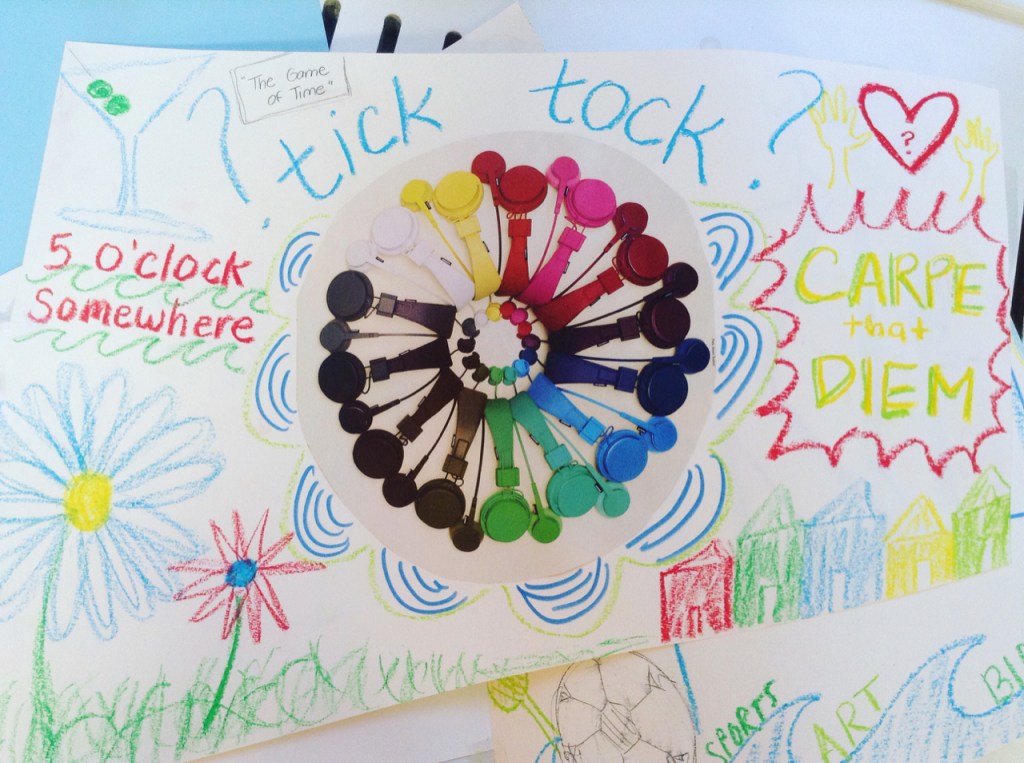
Let’s Carpe that Diem, dear creative time explorers!

I’m happy to announce that the course “Where is My Time?” is ready for you to sign up! Join the kick-off meeting on March 7th and then the following 3 meetings will take place on March 14th, March 21st and March 28th.

Early bird tickets are available 🙂

It’s a 3 weeks long course with 4 weekly meetings.

By taking this course you will become more aware of:

  • How you look at your own past, present and future;
  • How does this personal view on time impacts the actions you take in daily life and how you interact with your surroundings;
  • How do these different temporal frames impact your personal well-being and how you can improve it;
  • How can you strengthen the positive aspects of your temporal profile and
  • How to create more balance in your temporal profile, that will improve not only your personal well-being, but also will be beneficial for others around you across various daily-life situations.

This course will also help you:

  • to become the author of your life’s narrative
  • to build up resilience and overcome the anxiety connected with choosing the future
  • to figure out what is meaningful for you

What we will do during the course:

  • explore your personal temporal profile using different complimentary methods
  • you will get to spend some time interviewing and observing your temporal opposite
  • you will create a personalized program on how to enhance your temporal profile and get closer to the balanced one
  • you will plant some seeds for new skills to grow

The course is based on my extensive research in the field of psychology of time and time perspective. The program provided in the course is evidence based, it has been piloted, further developed and crafted from 2016. 

Read more about the course here.