and being..
I like to go on walks. Often I start my day with one. It’s the time to listen to the soundscapes around me. It’s tome to observe and time to notice. Time to be with the world and let the world be inside of me. It quietens the mind, helps to sort out the thoughts, helps to zoom out and refresh. It’s a practice I cherish.
Sometimes I shift my attention to the sound of my steps and notice how it changes depending on the shoes, or the surface. I take in the sounds around me, what’s close, what’s far away.. maybe there’s a pattern, maybe the sounds are totally random. In Copenhagen it was fun to listen to all the bikes, each one with a very different melody. In nature it’s the birds, or the waves of the sea, or the wind in the trees, the bees.. Robert Walser captured this so nicely:
“With the utmost love and attention the man who walks must study and observe every smallest living thing, be it a child, a dog, a fly, a butterfly, a sparrow, a worm, a flower, a man, a house, a tree, a hedge, a snail, a mouse, a cloud, a hill, a leaf, or no more than a poor discarded scrap of paper.”
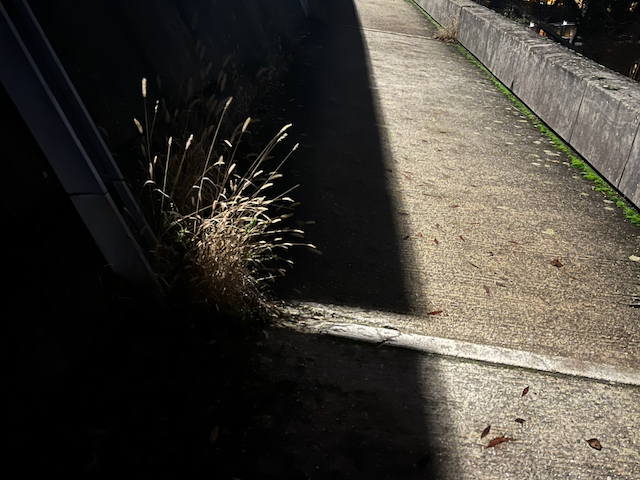
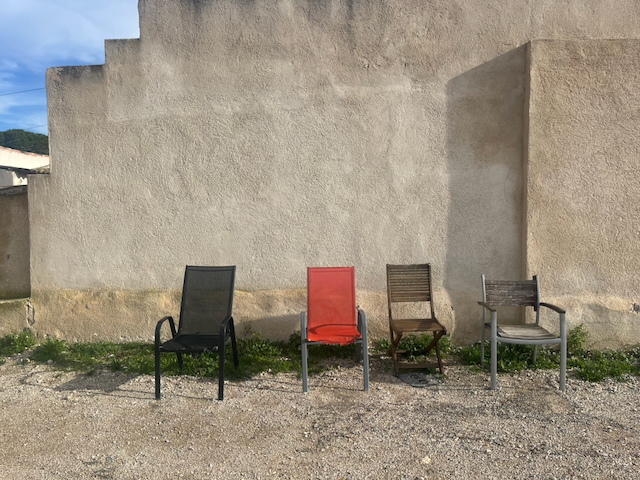
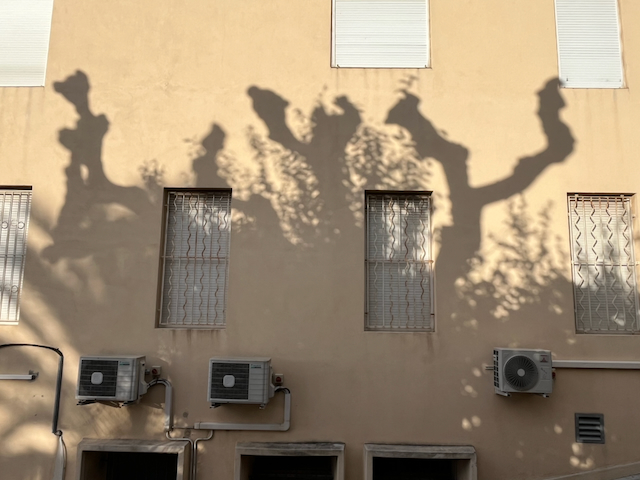
In my practice I sometimes take clients on what I call a silent walk. We leave the room, we walk together, and we don’t talk. The instruction is simple: observe what you hear, what you feel, what you notice. Pay attention to the surfaces under your feet. Look at things that are close up and far away. Notice smells. If you feel cold, how do you know you are cold?
I worked once with a person for whom any pause felt threatening. The to-do lists were never-ending, the rush into the future was constant, and stopping somehow equalled disappearing. There was a huge fear underneath all that speed. So we worked with the walk. Because during the walk you are doing something, you are actively present, but in the mode of being. You are with the world. And that turned out to be the thing that helped.
I also use the silent walk in workshops with students, sometimes about creativity, sometimes about the variety of temporal experiences. In one of my workshops back in Copenhagen we walked through the city and through the Assistens Cemetery, which is both an active cemetery and a public park. About 15 of us. In silence. For about 25 minutes.
When we came back I asked what they had noticed.
One student said the cemetery felt like a celebration of life more than a place to bury people. Every stone had flowers or something around it, it felt very personal at every individual grave. Another noticed the contrast of being in a place where she usually feels older, thinking about old age, while hearing all the youthful sounds of kids going crazy on the playground right next to it. Someone else felt a large sense of nostalgia, the sounds of kids and lawn mowers reminding her of summer camps and elementary school and running around with siblings. Very grounding, she said.
One student talked about the bikes. Each one sounded different depending on the gear, the wheels, the pace of pedaling. She had tuned it out before, but now she heard it like music. Another noticed that during the walk there were many things she wanted to communicate and say out loud, and when they would catch each other’s eye, they knew they were sharing the same moment. A connection without having to actually speak.
Several students reflected on the silence itself. One of them said she struggles with dissociation and is working on it in her own therapy, and that this walk was a great lesson in actually trying to be more present, because normally when she has headphones on she feels blank. Another said it was a relief to not have to talk, that silence felt like a burden she didn’t realize she was carrying. “I need to shut up sometimes,” she said, laughing. “We’ve gotten so accustomed to filling the silence, and if everyone’s quiet, it’s like, oh, something’s wrong. But actually we were all just having a great time.”
One student noticed the same woman walking her dog when we went into the cemetery and again when we came out. She had no idea how much time had passed. Another noticed the sound of her own footsteps for the first time in months.
Silence as a shared experience is rather rare. It happens on some special occasions. But to observe what happens when someone gives a group permission to be quiet together is very interesting. Rebecca Solnit, in Wanderlust, calls walking a way of thinking. I’d add that it is also a way of feeling, and of noticing that you are still here.
In existential analysis we say: where we give time, that’s where life happens. The silent walk is one way to give time. And what you notice, if you do this once in a while, even 5–7 minutes of really active presence, of noticing where the light is coming from, what you are hearing, what the air smells like, is that those 5–7 minutes expand in retrospect. You remember them. They don’t blur into the routine.
That is part of what I work with in my practice. People in their 30s, 40s, 50s, 60s come and say: I feel like everything is rushing, like the days are all the same, like I don’t have enough time. And one of the simplest things I can offer is this. Walk. Be silent. Pay attention. The time will slow down.
Try it sometime. Tomorrow morning, or tonight. Leave the headphones at home. Walk for 10 minutes and just notice. What do you hear? What’s close to you, what’s far away? How does the ground feel under your feet?
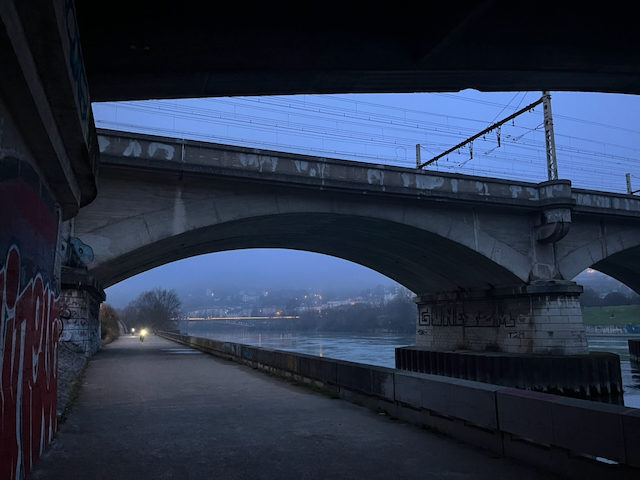
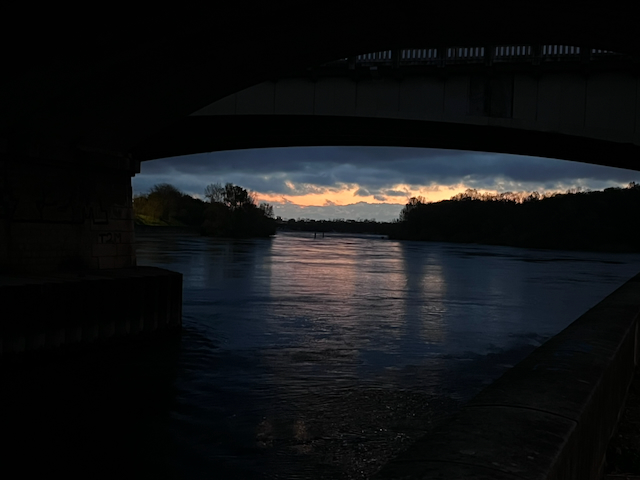
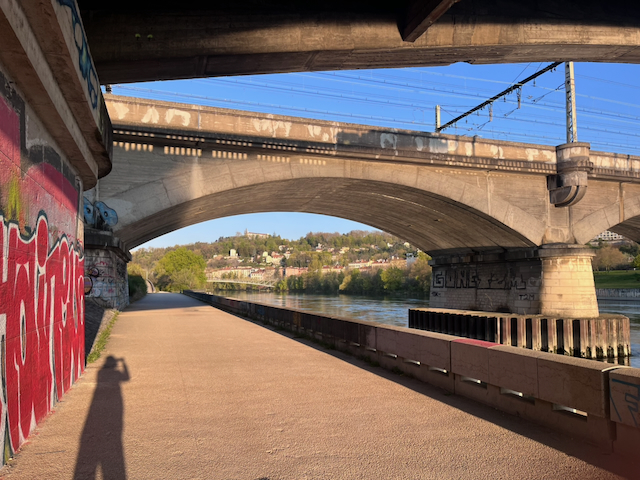
If this resonates and you’d like to explore working with time and presence, in 1:1 sessions or as part of a group, reach out! I see clients online and in Lyon, and I am open to leading silent walks and time-perception workshops with organisations, schools and small groups.
There is something else for me about walking that I have not touched here: walking and creativity. There is a fair amount of research on this, and a long list of writers, painters and composers for whom walking was a non-negotiable part of their working day. More on that soon.
References
Solnit, R. (2001). Wanderlust: A History of Walking. Penguin Books.
Walser, R. (1917/2012). The Walk. New Directions Publishing.

